
Reviewed · COOKING CLASSES
Marrakech: Moroccan Cuisine Cooking Class in Local Home
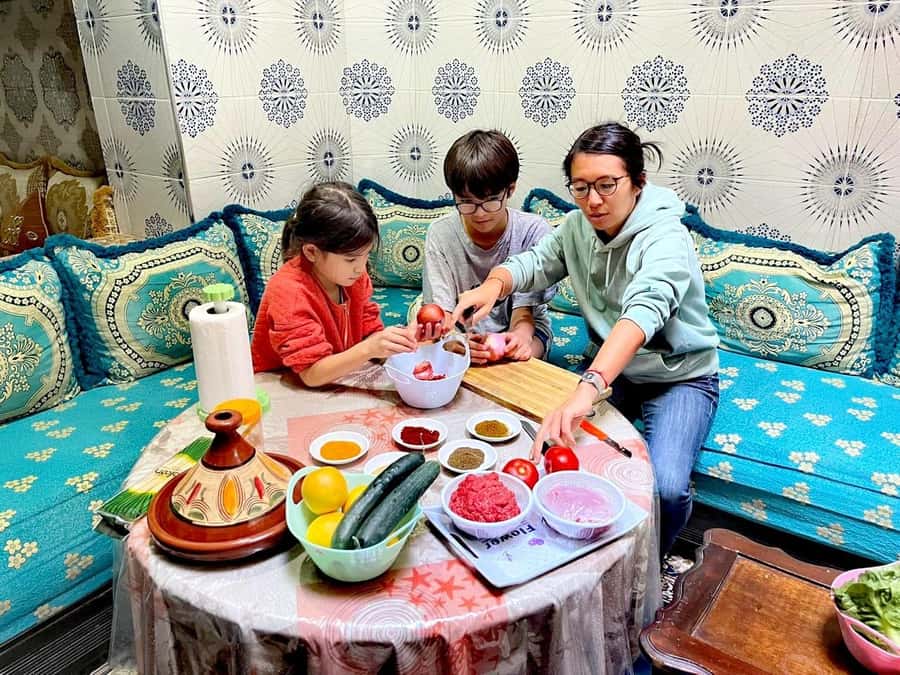
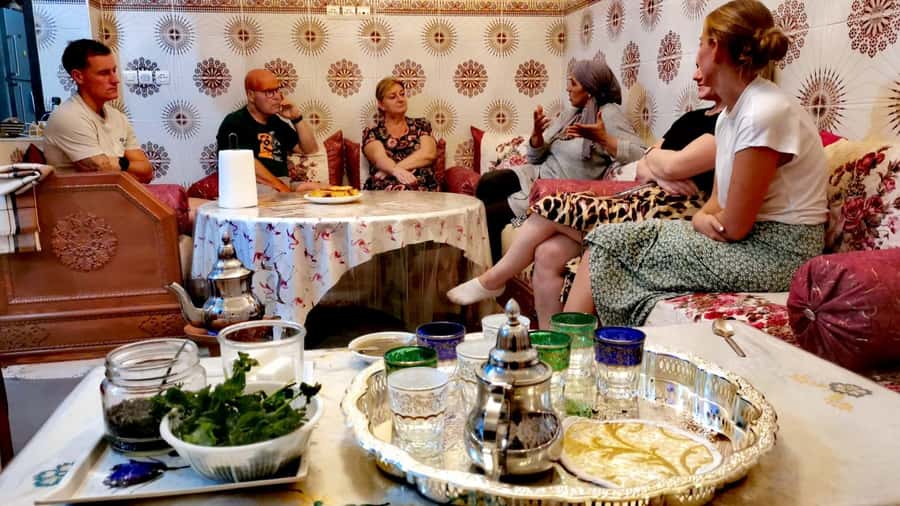
A cooking class in a real Marrakech medina home is interesting because the kitchen is part of the story. You cook traditional dishes, including Moroccan bread and tagines, while Abdo brings Moroccan culture into the lesson.
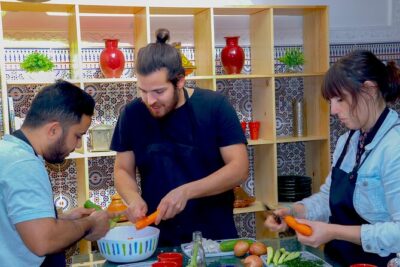
I really like the hands-on feel. I love that you chop, cook, and actually make the food step by step, even if you do not consider yourself a cook. I also like the cultural storytelling that flows through the session, with tea habits and social life showing up alongside the recipes.
One consideration is logistics. Finding the right riad can be tricky in the medina at first, and there is no transportation included, so you should plan to walk.
Key highlights worth your attention
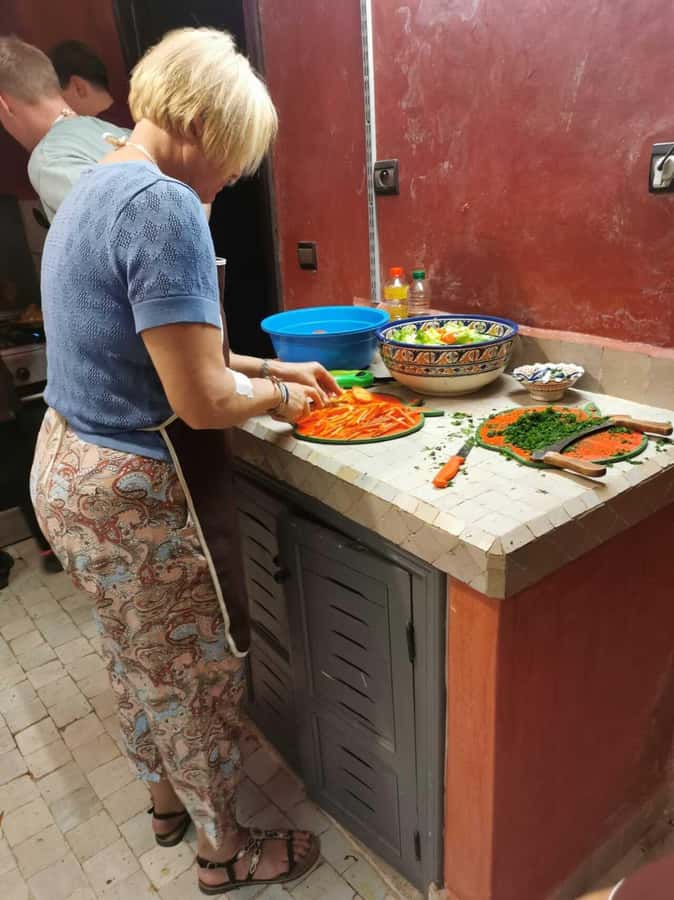
- A local-home kitchen setting: you learn in a real Marrakech home, not a generic classroom.
- Step-by-step tagine process: you actively cook, then eat what you made.
- Moroccan bread included: you get hands-on with bread, not only soups and stews.
- Abdo and the story-led teaching style: expect humor and culture mixed into the meal.
- Small-group energy: many groups are small enough that everyone gets involved.
- Take-home recipes: you leave with instructions to recreate the dishes later.
A Marrakech medina kitchen, where cooking comes with culture
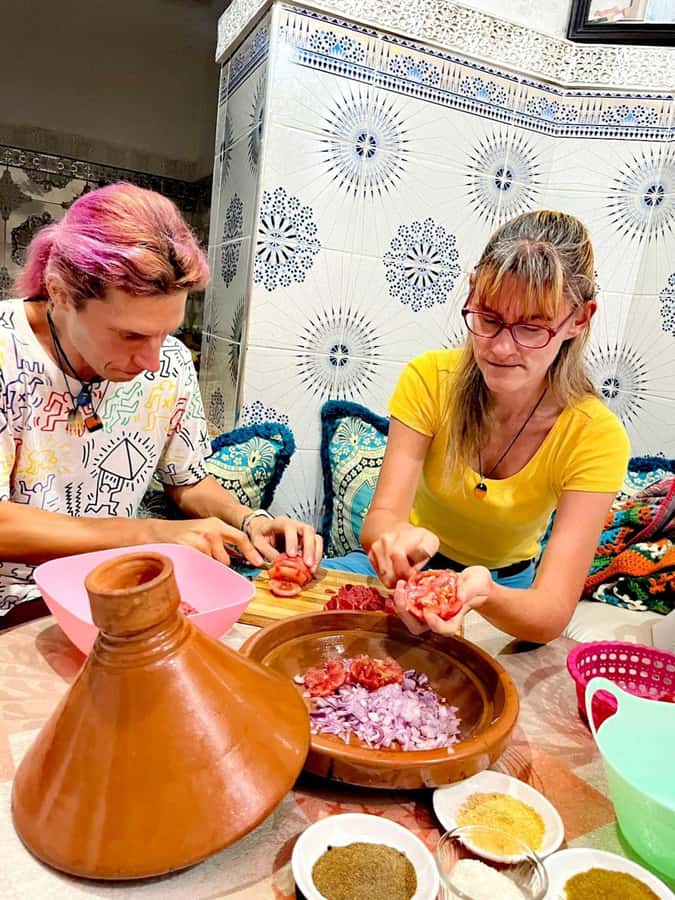
This class works because it is not just about finishing a plate. It is about learning how food and daily life connect in Morocco. You start in the Marrakech medina area, in a traditional house where the rhythm of cooking and eating feels familiar to locals.
The host, often called Abdo or Abdul in guest stories, does more than explain tasks. He turns each dish into something you can picture at home, from how people cook tagines to why certain flavors show up again and again. That is the part that makes it stick, especially if you want more than a food photo.
More Cooking Classes in Marrakech
- Marrakech: Moroccan Cooking Class with Pickup
★ 4.6 · 1,862 reviews - Marrakech: Traditional Moroccan Cooking Class & Market Visit
★ 4.8 · 1,861 reviews - Marrakesh: Moroccan Dishes Cooking Class with a Local Chef
★ 5.0 · 1,615 reviews
Where you meet, how to avoid the medina maze
You meet at the riad area with clear instructions. The guide waits about 10 minutes before the start time, and you should wait in front of the riad, not inside. The meeting point is directly in front of Riad les Etoiles Berberes.
Look for the guide wearing a green top, which makes it easier to match names and groups. If you rely on maps, I suggest using Google Maps. Some guests found it easier to navigate than Apple Maps, especially once you are on narrow medina streets.
Also note the simple rule set for comfort and respect. No smoking, and alcohol and drugs are not allowed. The class also asks you not to make noise, which helps keep things relaxed in a household setting.
What the 3 hours actually feels like
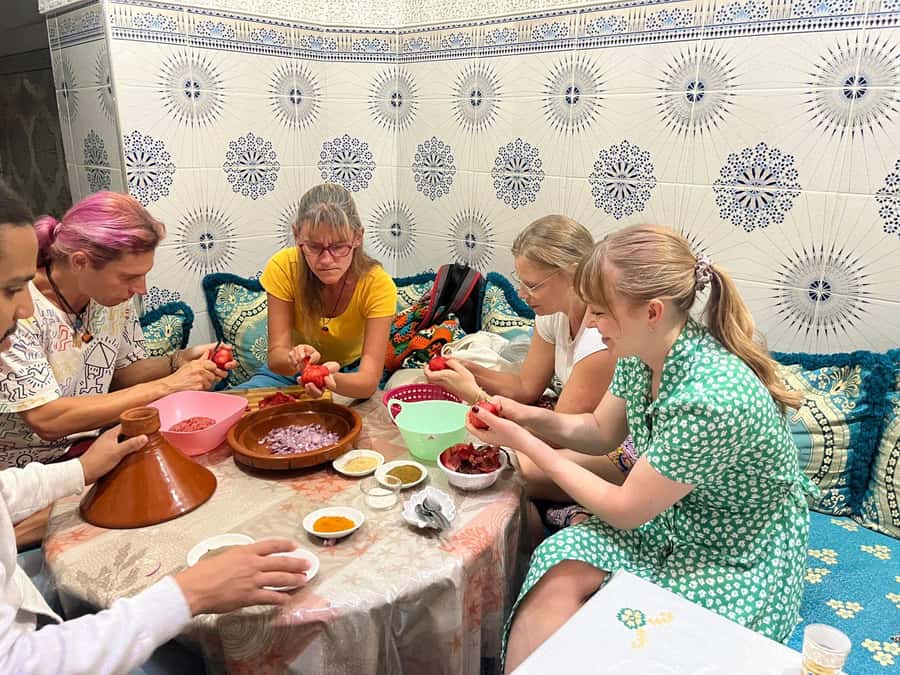
A common mistake with cooking classes is expecting a rushed conveyor belt. This one is structured enough to teach, but it still moves at a human pace.
You spend time learning how ingredients go together, then you move from chopping into cooking. By the time the meal lands on the table, you are not just tasting. You are eating with the knowledge of what you did, why you did it, and what changes the flavor.
The menu can change based on dietary needs. If you have restrictions, tell the host ahead of time so the plan can be adjusted. In practice, you might find the class accommodates vegetarians by modifying dishes while keeping the Moroccan approach.
Bread time in Morocco is not a side quest
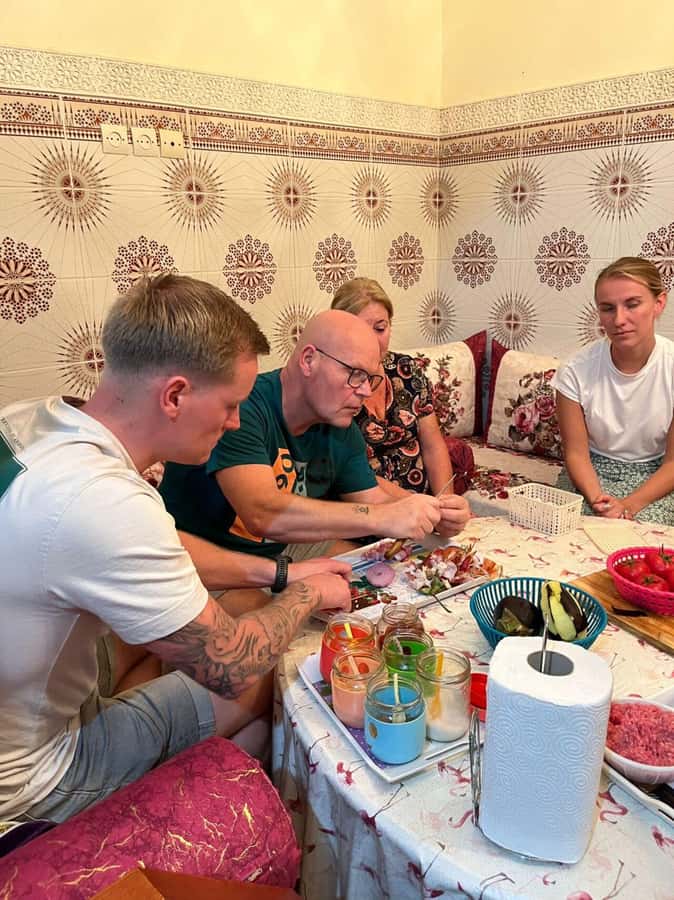
Moroccan bread is one of the best ways to understand the style of cooking here, because it is about rhythm and warmth as much as ingredients. In this class, you learn to make Moroccan bread as part of the session, not as a quick demonstration.
Bread changes the whole feel of the meal. It gives you something to tear, dip, and share with your tagine. And because you are making it yourself, you get the satisfaction of taking a technique home.
It also helps you understand what “local” means in the medina. Even if you have eaten Moroccan bread in restaurants, making it at home style gives you a more grounded idea of how it is served and used.
If the Marrakech plan still has a gap:
- Marrakech: Agafay Desert Sunset, Camel Ride, and Dinner Show
★ 4.6 · 35,119 reviews - From Marrakech: Ouzoud Waterfalls Guided Hike and Boat Trip
★ 4.7 · 33,630 reviews - Marrakech: Agafay Desert Quad & Camel Rides with Dinner Show
★ 4.8 · 27,382 reviews - Marrakech: Agafay Desert Quad Biking Tour with Dinner-Show
★ 4.8 · 16,569 reviews
Chicken tagine with olives and golden fries: your first real win
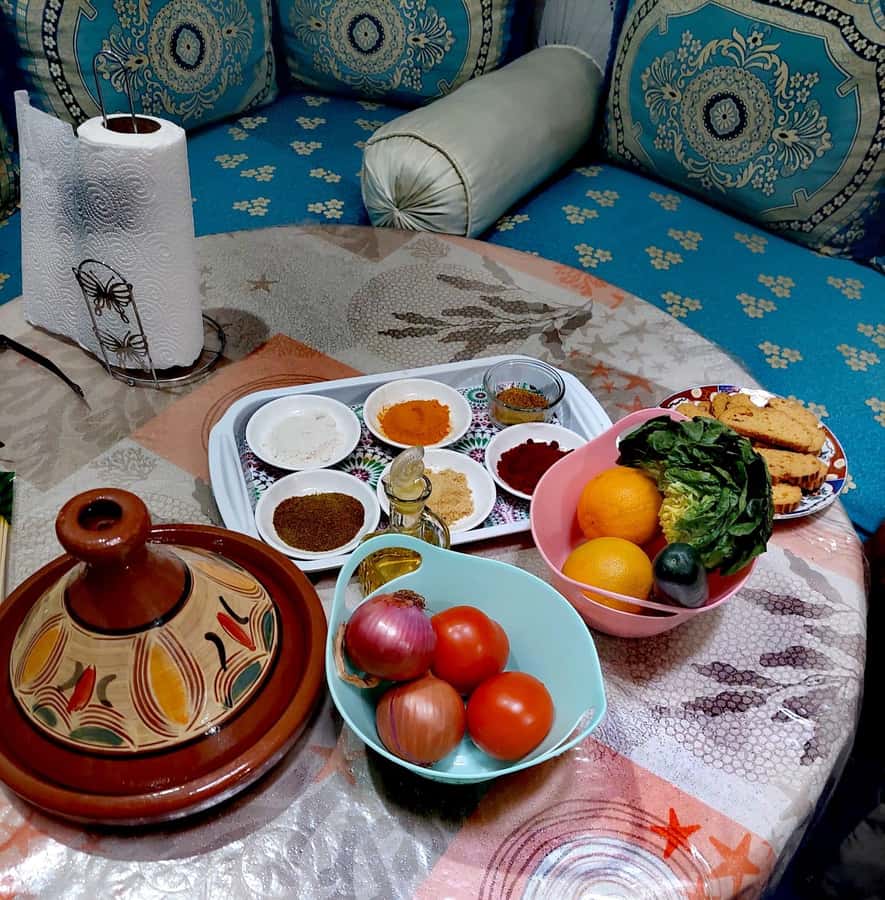
Tagine cooking is the heart of Moroccan food, and this class teaches the process in a straightforward way. One of the dishes you may make is chicken tagine with olives and golden fries.
The value here is in the method. You do not just watch a pot simmer. You learn the order of tasks and how the tagine supports flavor as it cooks. Once you finish, you eat it as a shared meal, so you can connect steps to results.
Olives add a salty, savory depth that also balances richer elements in the sauce. And the fries, described as golden, give you that comforting contrast that makes the plate feel complete.
Meatball tagine with melted cheese, plus zaalouk
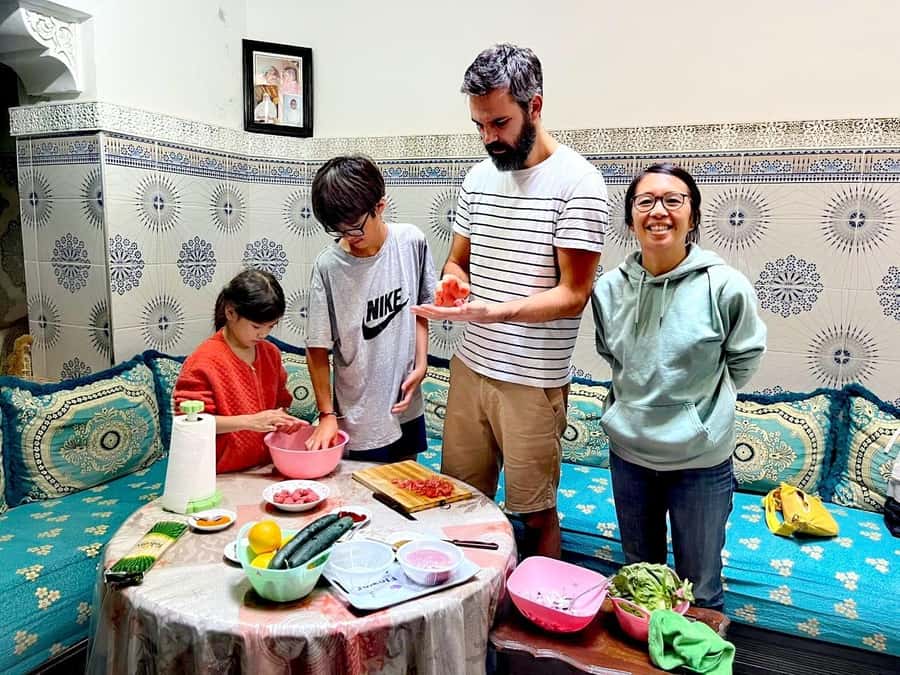
Another dish on the menu is a meatball tagine topped with melted cheese. This is one of those Moroccan comfort-food combinations that feels both familiar and surprising.
The meatballs help you practice shaping and seasoning. Then the tagine cooking teaches you how flavors meld rather than sit separate. The melted cheese topping is a big part of the final texture and richness, and it makes the dish feel special without requiring fancy tools.
You may also cook zaalouk, a traditional Moroccan eggplant dish. Zaalouk is a great lesson in how Morocco turns humble vegetables into something intense. When you taste it, you understand why eggplant keeps showing up in Moroccan home cooking.
Salads that actually matter: tomato, green pepper, and more
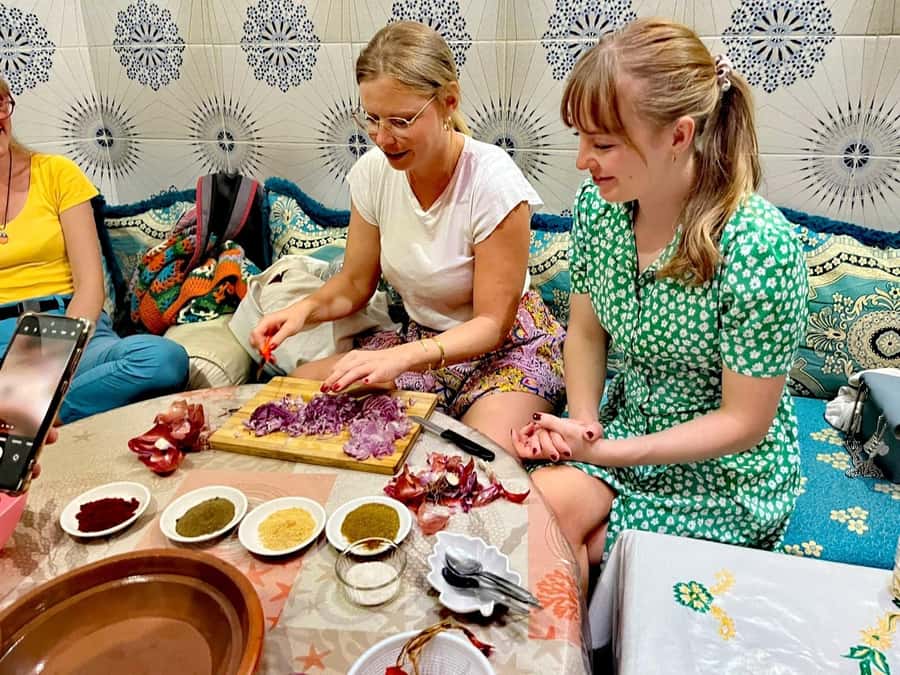
It is easy for “salads” on tours to feel like an afterthought. Here, the salad course has a clear purpose. You may prepare a tomato and green pepper salad that refreshes the meal and cuts through the heaviness of tagines.
That matters for two reasons. First, it keeps the overall plate balanced. Second, it shows you that Moroccan meals are built as a set, not just as one main dish.
You will also learn how to prep ingredients in a practical way, including chopping tasks you can repeat at home. Even if you are not an experienced cook, this part of the class helps you build confidence.
Desserts and the sweet finish: fruit salad
Dessert in this class is a special fruit salad. It is a clean, light ending after the savory dishes.
Fruit salad also fits the overall Moroccan idea of finishing with something cooling and fresh. It helps you reset your palate before tea time or final bites, depending on how your session flows.
Tea, spices, and the stories that connect the table
One of the most praised parts of the experience is how the guide teaches through storytelling. Abdo (and guides in similar roles) often explains Moroccan culture around socializing and tea drinking while you cook.
In many sessions, tea becomes part of the learning. You might learn how Moroccan tea is made and served, including a fun way to pour it that keeps things playful. Guests also mention learning spice and tea tips along the way, which is useful if you want to recreate the flavors at home.
Even if you already know the basics of Moroccan cuisine, the cultural context makes the meal more meaningful. You start to notice patterns, like how sweetness, saltiness, and acidity work together instead of fighting.
Group size and class vibe: why small groups work
This class tends to run with small groups, often around 5 to 12 people. In some cases, it can be more intimate, with fewer participants so everyone gets time at the counter.
That is a big deal for value. When the group is small, you do not spend the whole session waiting for a turn. You chop, you cook, and you ask questions. That also helps the host keep the pace smooth.
You can also expect a welcoming vibe. Many guests describe the host as funny and patient, and the atmosphere as relaxed. It is also family-friendly, with multiple age groups joining and participating.
What is included, and why it is better than a basic cooking demo
The class includes a bilingual guide and fresh Moroccan ingredients. You get step-by-step guidance and plating tips, then you share a meal together.
You also get a special fruit salad as part of the food you prepare. Cultural storytelling is included during the session, which is one of the main reasons this is more memorable than a standard cooking lesson.
A huge value add is the take-home recipes. That matters because cooking classes are only half useful if you do not know how to repeat them. Having recipes means you can keep practicing after you return to your normal kitchen.
Dietary changes: how flexible is it?
The menu is changeable and can be modified for dietary restrictions. This is one of the best practical perks if you travel with preferences or allergies.
If you want vegetarian adjustments, the class has experience with accommodating them. Guests have reported that the host modifies dishes without turning the menu into something generic.
The key advice is simple: communicate restrictions clearly before the class starts. Then you can relax and focus on cooking, not on worrying what you can eat.
Price and value at around $24 for 3 hours
At about $24 per person for a 3-hour experience, this class offers strong value if you care about cooking skills, not just tasting.
You are paying for several things at once:
- hands-on instruction in a real home setting
- fresh ingredients used during the meal
- guided teaching in multiple languages
- take-home recipes so the experience continues after your trip
The cost also makes it a good choice for a rainy day in Marrakech, when you want a plan that keeps you warm and busy. And since it is not a big, impersonal show, your money is more likely to translate into actual participation.
If you expected private transportation, that is one place you will spend extra. Transportation is not included, so your total travel time depends on where your riad is.
Who this cooking class suits best
This is a great fit if you want a practical, friendly way to learn Moroccan cooking while seeing how people live in the medina.
It is especially good for:
- beginners who want clear instructions and a low-pressure environment
- food lovers who want to cook tagines and salads, then taste your own work
- travelers who like cultural stories mixed into hands-on activities
- small-group seekers who want more interaction than a large tour
If you hate walking, or you expect a no-effort experience with pickup and drop-off, this might feel inconvenient. The class also follows household rules like no smoking and no alcohol, so it is more about respect and comfort than party vibes.
Should you book this Moroccan cooking class in a local home?
Yes, if you want more than restaurant food and you like learning by doing. The strongest reason to book is the combination of hands-on cooking with cultural storytelling, led by Abdo, in a real medina home.
I would skip it only if navigation stress and walking are deal-breakers for you. Otherwise, the class offers a rare mix: real cooking skills, a full meal made by you, and recipes you can use after you go home.
Just reviewed around Marrakech
- From Marrakech: Day trip to Ouzoud waterfalls and boat tour★ 5.0 · 73 reviews
- Private horseback ride in the Palmeraie of Marrakech★ 5.0 · 73 reviews
- Marrakech to Essaouira / Small group day tour To Essaouira★ 5.0 · 73 reviews
- 1 Day Guided Tour of World Heritage Kasbah Ait Ben Haddou from Marrakech★ 3.5 · 73 reviews
- Marrakech: Authentic Local Dinner with Transport★ 4.1 · 73 reviews
- Ourika Valley Day trip: Hike, waterfall, lunch and Relax★ 4.8 · 73 reviews
- Waterfalls, Three valleys, Atlas Montains, Camels & Desert★ 5.0 · 73 reviews
- Marrakech: Cycling Tour in Palm Groove with Local Breakfast★ 4.7 · 73 reviews
Cooking Classes, compared.
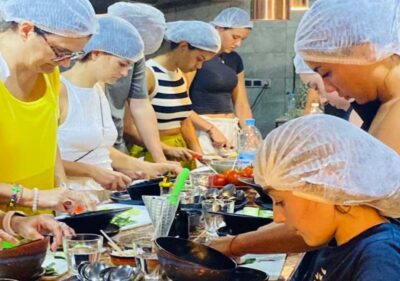
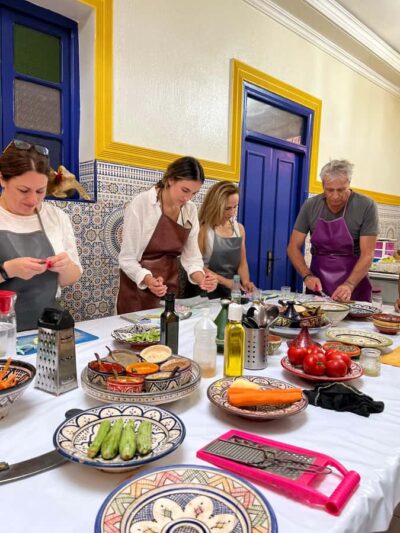
Traditional Moroccan Cooking Class & Market Visit
Read our review →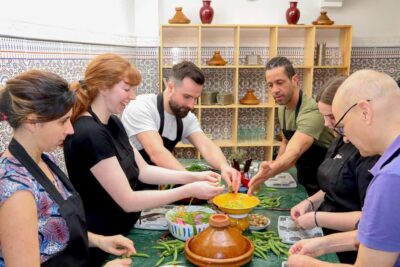
Moroccan Dishes Cooking Class with a Local Chef
Read our review →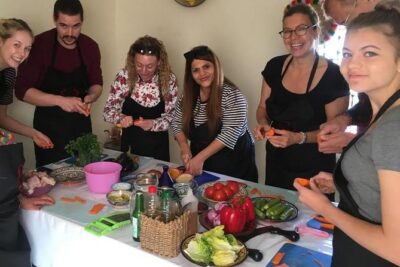
Moroccan Cooking Class & Marrakech Market Visit with Chef Khmisa
Read our review →
Half-Day Cooking Class with Local Chef Laila in Marrakech
Read our review →
Marrakesh cooking class with chef Hassan – Local dishes
Read our review →Browse the lists this tour appears in