
Reviewed · COOKING CLASSES
Marrakech: Tajine Cooking Class in a Traditional Riad
Tajine cooking classes in Marrakech can turn tourist-y fast. This one stays grounded because it starts in Djemaa El-Fna and ends with you cooking in a real riad kitchen, led by people like Amina and Samira who love sharing how Moroccan food actually gets made. I especially like the market shopping for spices and fresh produce and the hands-on way you build your tajine, not just watch it happen. One heads-up, though: you need to be comfortable walking the medina streets and cooking in a small space for a full 4 hours.
If you want to learn the flavors behind Moroccan staples, this format does that fast. You’ll sip mint tea, brew it the right way, and get a take-home recipe sheet so you can recreate the experience later. The main drawback is also the nature of the medina, it is not a sit-down, low-walking activity.
Key moments worth centering in your day
- Djemaa El-Fna start with a real meeting point: find the official guide at Café France to avoid the fake guide hustle
- Souk shopping with Arabic food vocabulary: you learn practical words, plus how to choose spices and produce
- Mint tea ritual before cooking: tea is part of the culture, not a side drink
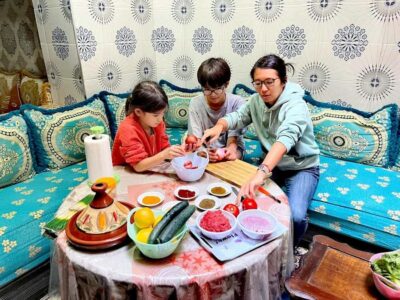
- Hands-on tajine prep in a traditional riad: you chop, layer, and cook together in a home setting
- A small group up to 12 people: enough attention without the class feeling crowded
- Food and technique in one meal: tajine plus Moroccan salad, with dessert depending on availability
Finding your way in Djemaa El-Fna, then getting cooking fast
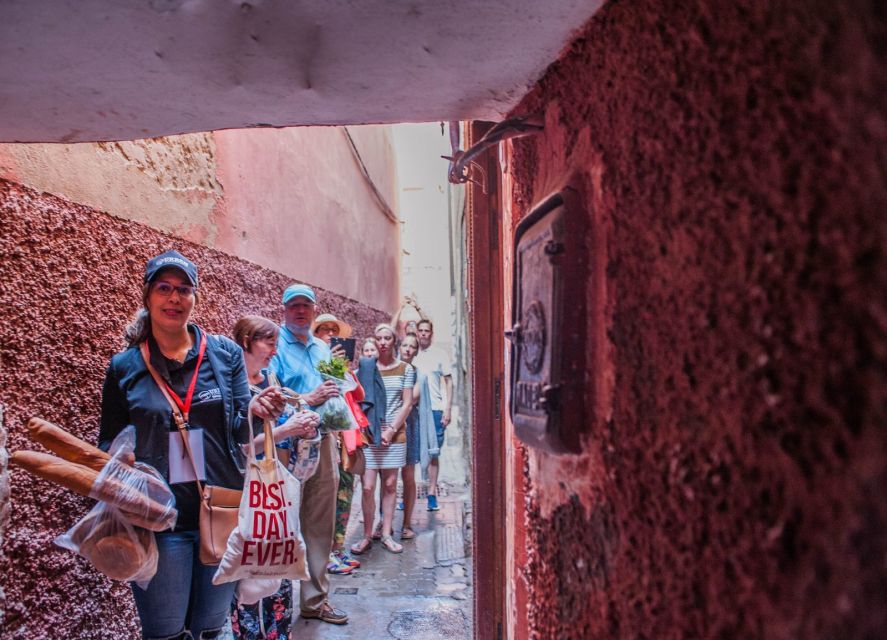
Djemaa El-Fna is the kind of place where you get pulled in five directions at once. Your best move is to stay calm and go straight to the meeting point: outside Café France, inside the square on the right side. It’s a tall, three-story café, so you can spot it without guessing too much.
Here is the key detail that saves time and frustration: throughout the square, you’ll see people trying to sell tours. I strongly suggest you look specifically for your official guide holding an Urban Adventures sign or badge. If you can, arrive a few minutes early, then check you are with the right person before walking off into the maze.
No hotel pickup is included, so plan your arrival on your own. This class is designed for you to show up, meet your guide, and move right away into the souks.
More Cooking Classes in Marrakech
- Marrakech: Moroccan Cooking Class with Pickup
★ 4.6 · 1,862 reviews - Marrakech: Traditional Moroccan Cooking Class & Market Visit
★ 4.8 · 1,861 reviews - Marrakesh: Moroccan Dishes Cooking Class with a Local Chef
★ 5.0 · 1,615 reviews
Souk shopping: where you learn more than ingredients
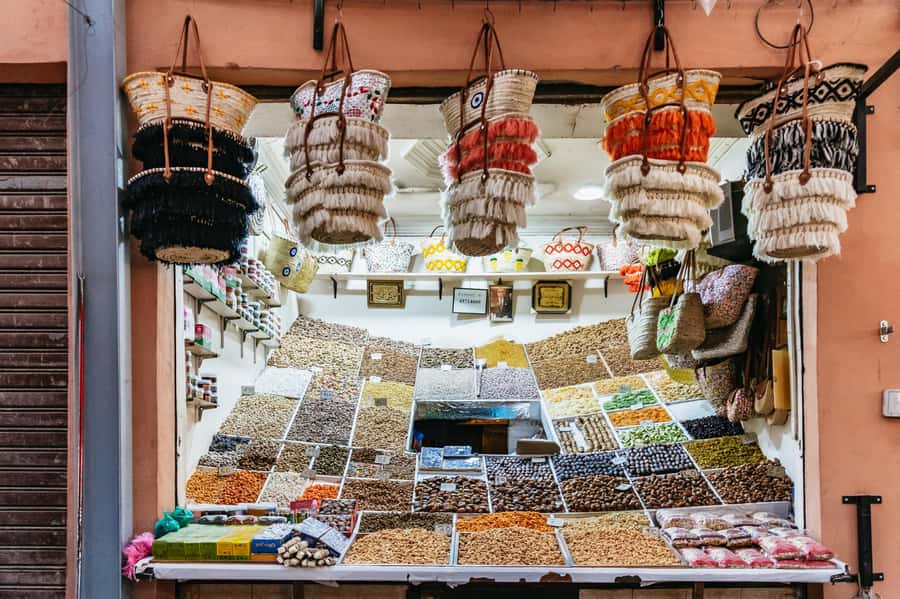
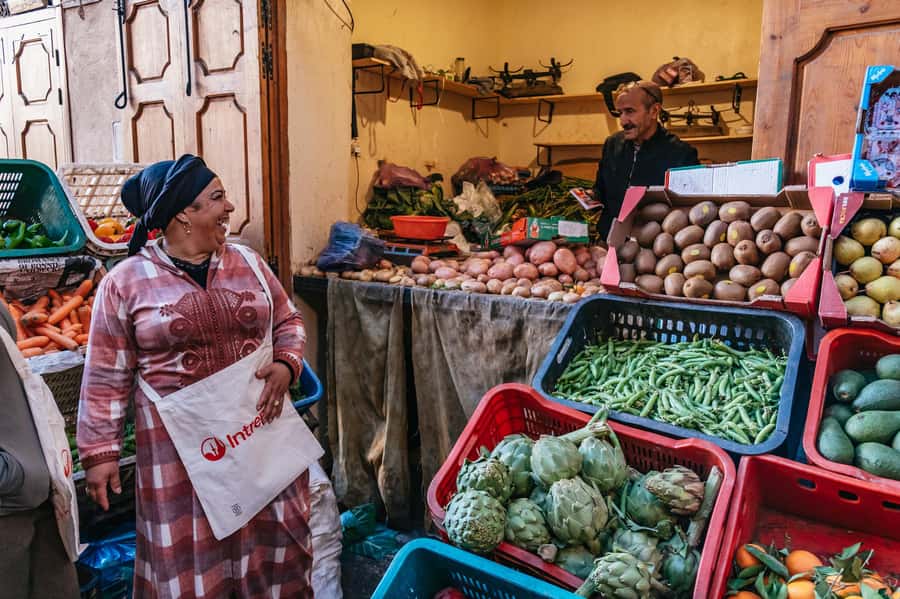
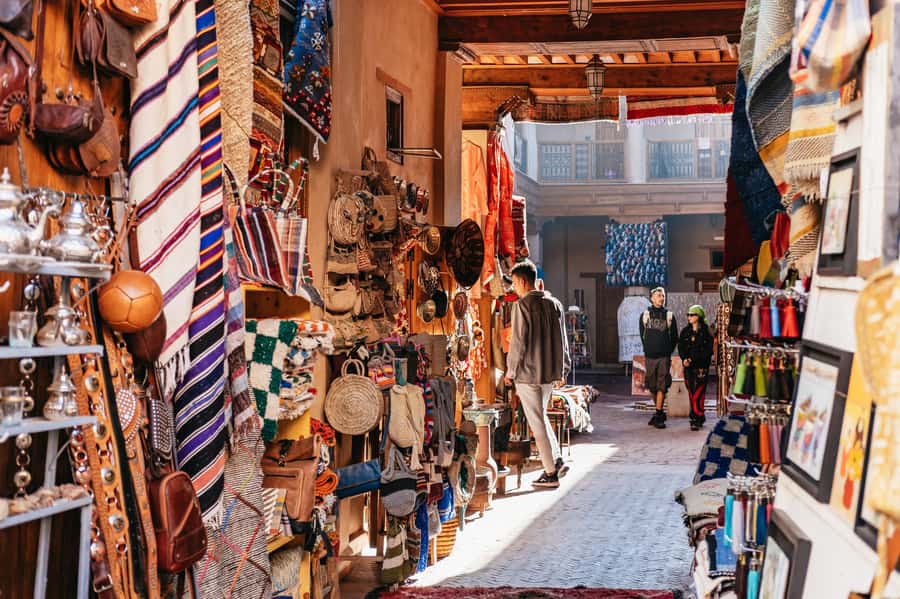
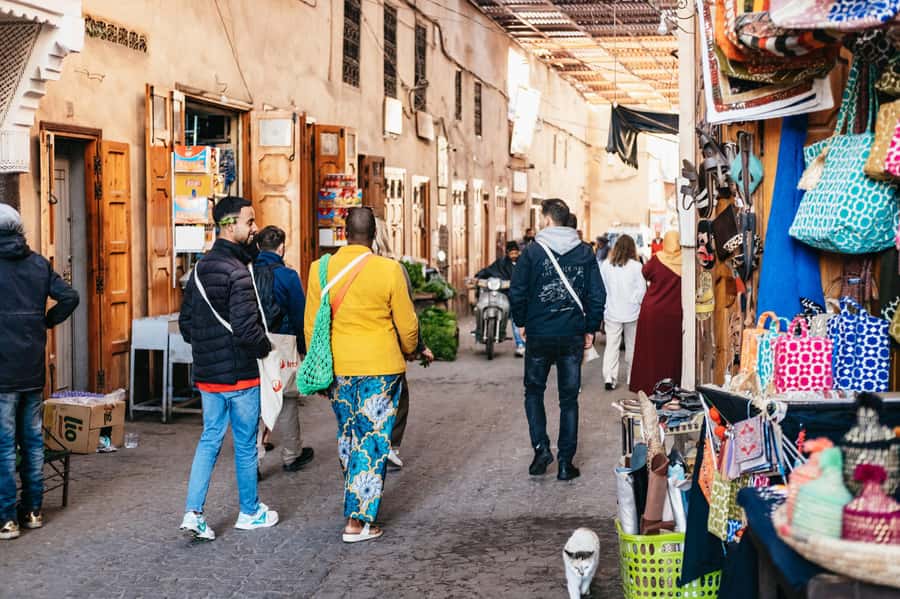
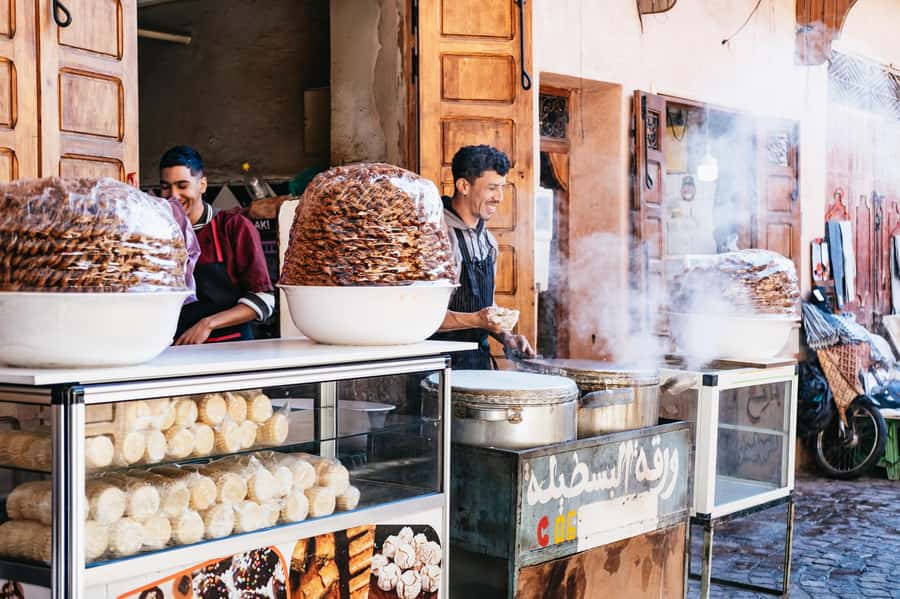
The class starts by heading into the markets from Djemaa El-Fna. You’re not just buying food. You’re learning what to look for, how to ask about ingredients, and what makes certain spices and produce work well in Moroccan cooking.
You’ll get Arabic food vocabulary tips while you browse. Even a few useful words can change the vibe fast. It helps you ask what you need, understand what you are buying, and feel more in sync with how local shopping actually happens.
One thing I love about this part of the experience is that it trains your senses. You learn to shop for freshness, you see how herbs and spices are chosen, and you get practice with the bargaining rhythm. Some people are surprised by how fun haggling can feel once you are doing it for something you’ll cook later, not for random souvenirs.
If you are vegetarian or avoid specific foods, the tour states you can be accommodated. That means your ingredient list in the souk should match your needs, not force you to guess.
Meet the chef energy, and why the riad kitchen matters
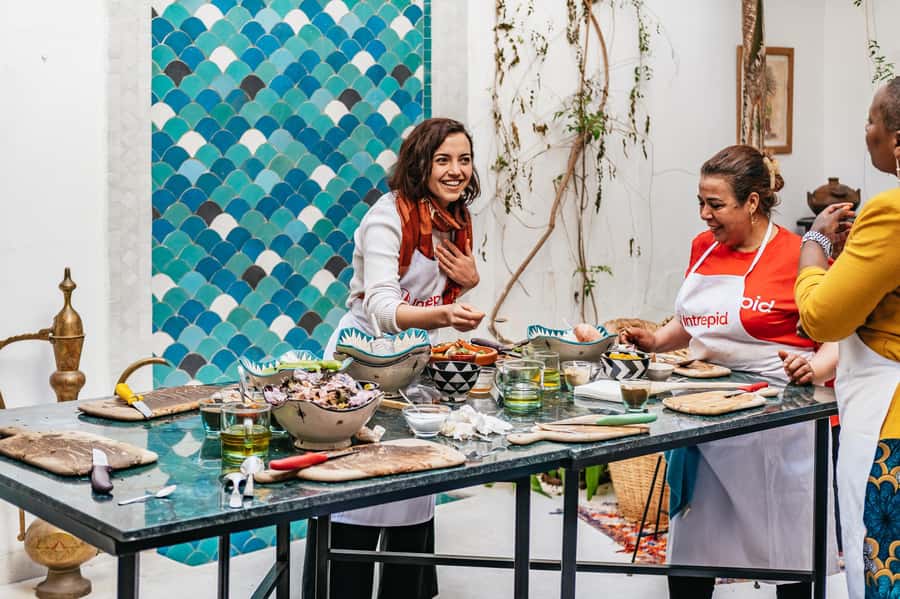
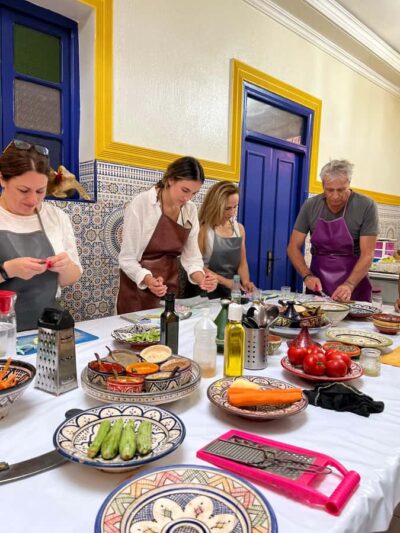
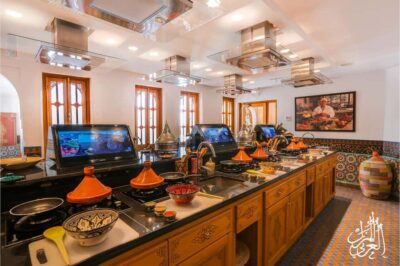
After shopping, you meet a warm, welcoming chef and move into the riad setting. This part is the heart of why the class feels authentic. A riad kitchen is not a staged studio. It’s a home space, with the smells of spices and the rhythm of real cooking.
From the way the guides run it, you can expect a structured flow. There is usually a first segment with tea, then you start prepping your salad and tajine ingredients. People like Khadija and Meriem have helped with equipment and prep in some sessions, and the general pattern is teamwork, step-by-step guidance, and plenty of patience for beginners.
In practical terms, cooking in a riad also helps you understand the basics of Moroccan home meals. You see how vegetables are handled, how herbs are used, and how spices are treated as part of layering, not just sprinkling at the end.
Mint tea first: the ritual that sets the tone
Moroccan mint tea is not just a drink in this experience. It’s the opening ritual, and it shows you a cultural habit through a simple, repeatable process.
You’ll learn how to brew mint tea patiently, and you’ll get time to enjoy it. In some classes, you may also get cookies as part of the tea break, like ghriba cookies. I like that this doesn’t feel rushed. You settle in, you meet the group, and then you get your hands dirty.
If you’ve had mint tea before and it tasted a little different each time, this is where the difference makes sense. The tea moment becomes your baseline for flavor and hospitality.
If the Marrakech plan still has a gap:
- Marrakech: Agafay Desert Sunset, Camel Ride, and Dinner Show
★ 4.6 · 35,119 reviews - From Marrakech: Ouzoud Waterfalls Guided Hike and Boat Trip
★ 4.7 · 33,630 reviews - Marrakech: Agafay Desert Quad & Camel Rides with Dinner Show
★ 4.8 · 27,382 reviews - Marrakech: Agafay Desert Quad Biking Tour with Dinner-Show
★ 4.8 · 16,569 reviews
Cooking your tajine hands-on, with real Moroccan technique
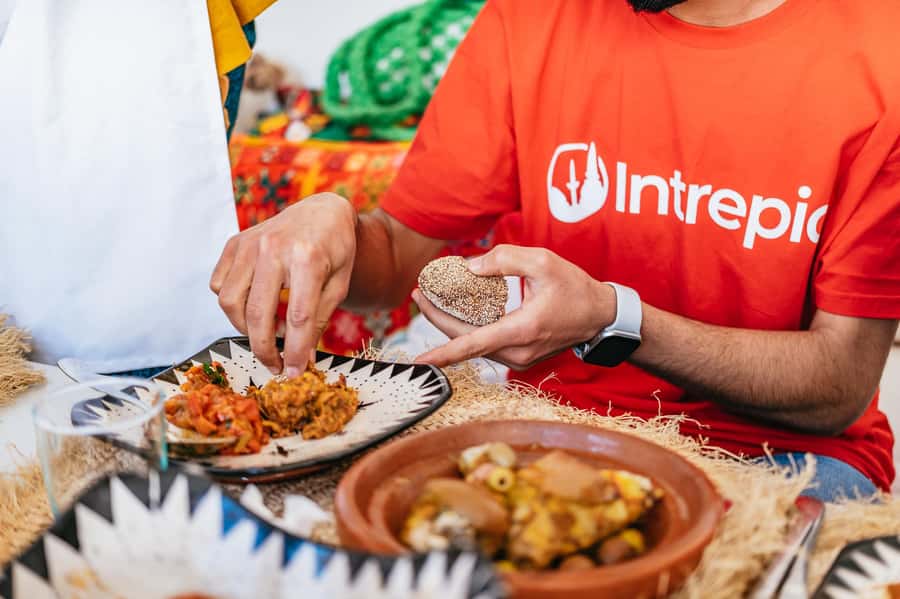
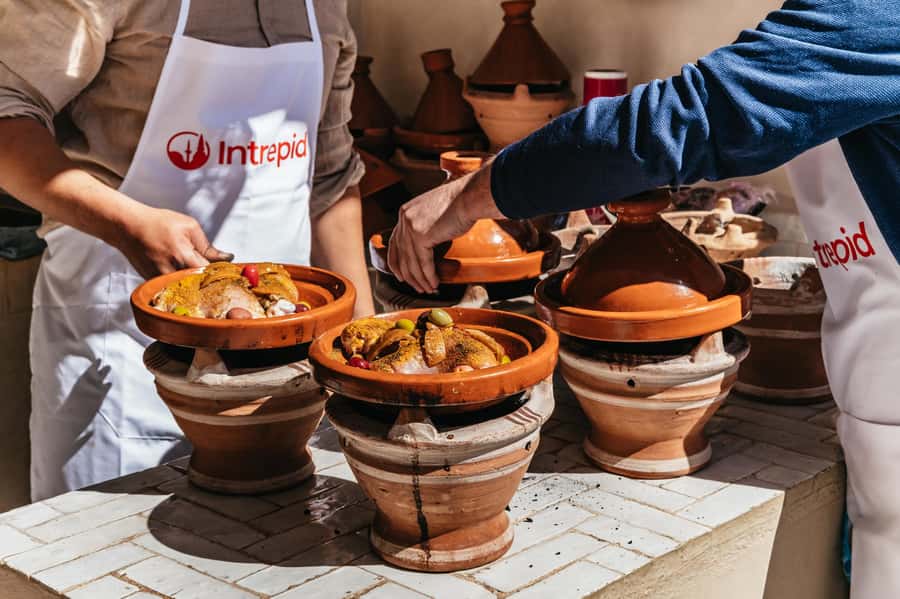
Now for the part you came for: tajine cooking. You’ll prepare a traditional tajine and a fresh Moroccan salad. The class is hands-on, so you chop, mix, layer, and assemble. In other words, you do the work, with support.
Many sessions focus on a chicken tajine style using flavors like preserved lemon and olives. That exact combination shows up often in the experience, and it’s a classic reason people fall hard for Moroccan tajine. If you are not eating chicken, you can tell the provider in advance so your menu can shift. Some classes have even included vegetable tajine options.
The salad is typically fresh and simple, which matters because it balances the richness of the tajine. It also gives you a break from constant simmering and lets you taste the meal as a complete plate, not just one dish.
The cooking setup is usually geared for a small group of up to 12 people. That size is important. It means the chef can correct your technique, show you how pieces should look, and still let you take the lead in building your tajine.
What you actually eat at the end of the class
After cooking, you eat what you made. The meal includes your tajine and Moroccan tea served during the experience, plus dessert depending on availability.
A common pattern in sessions includes:
- Chicken tajine, often with preserved lemon and olives
- Moroccan salad
- Dessert like oranges with cinnamon
The menu can vary based on availability, so don’t plan your expectations down to every ingredient. Still, the overall structure stays the same, cooking, eating together, and leaving with a recipe you can follow at home.
The local-family and medina-life component, in plain terms
This class includes a chance to meet a local family and learn about medina life. You are not just learning how to cook. You’re getting a human context for why these meals exist and how they fit into daily routines.
In some sessions, you may spend time at a host’s home with family members guiding prep and equipment use. Names that show up often include Amina, Samira, Karima, and assistants like Khadija and Meriem. Even when the menu and flow differ slightly, the consistent vibe is warm hospitality and practical sharing.
For you, the payoff is confidence. When you understand how locals shop, how they season, and what they prioritize, you can cook the flavors later without copying a single exact recipe line for line.
Dietary needs and who this experience suits best
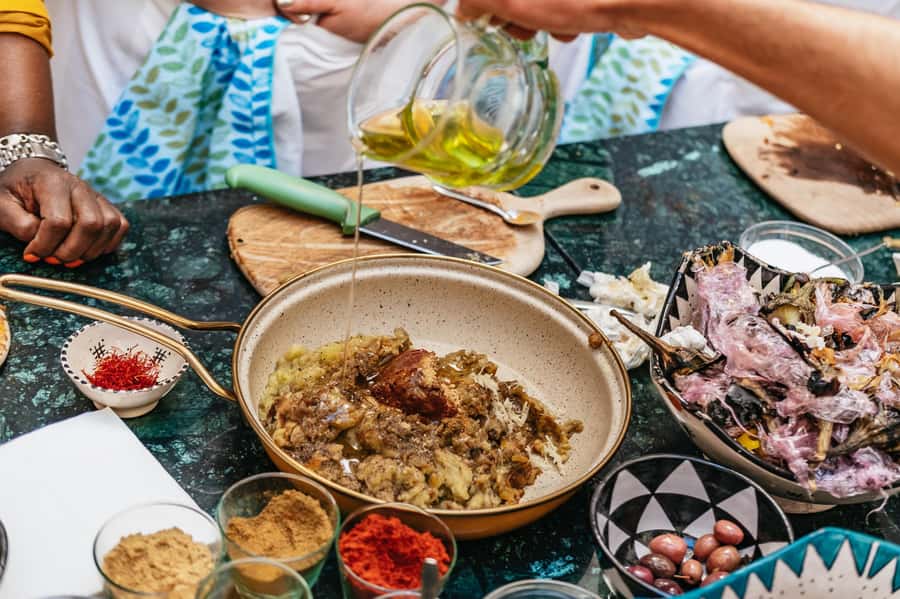
This experience can accommodate vegetarians, vegans, gluten-free, and other dietary restrictions. That is a big deal for value, because it means you are not stuck watching someone else cook while you eat something separate.
It is also child-friendly. Children under age 6 can join free of charge. If you’re traveling with kids, the small group size and guided steps usually help keep things moving.
There are also clear clothing rules: no shorts, no short skirts, and no sleeveless shirts. Plan to dress like you are visiting someone’s home, because that is the feel of the riad setting.
Who it suits best:
- Food lovers who want real technique, not just tasting
- Beginners who want guided chopping, seasoning, and layering
- People who like market time and learning how to shop locally
If you hate walking in dense streets, this might feel like a lot. But if you can handle a few busy blocks, it’s one of the best ways to get Marrakech flavor fast.
Price and value: is $57 fair for 4 hours?
At $57 per person for about 4 hours, this class is priced like a mid-range activity. The reason it feels fair is that you are paying for more than a recipe. You get:
- Market shopping with guidance
- Ingredients included, including vegetables, herbs, spices, and chicken (as applicable)
- Hands-on cooking with a local chef
- Mint tea during the class
- The meal you prepare
- A take-home recipe sheet
- A local-family connection and medina-life conversation
When you compare that to paying for a restaurant meal plus a separate cooking workshop, the math tends to work in your favor. You also come away with practical skills: how to identify fresh produce and how spice blends behave in Moroccan cooking.
The only real cost line to factor in is what you might spend on extra items while shopping. The class includes what you need for cooking, but you may want to pick up a mint tea set or extra spices. That’s optional.
Practical tips so you get the most out of it
First, wear clothes that fit the dress code and also let you move comfortably. In medina markets, you’ll appreciate breathable fabric and shoes you can trust.
Second, come hungry and ready to cook. Even though tea and cookies may appear at the start, you will still spend most of your energy prepping and simmering. If you arrive after a huge breakfast, the experience can feel less satisfying at the table.
Third, ask questions while you cook. The way the guides run things makes it easy to personalize. If you want a vegetable version, ask. If you want to know why preserved lemon works, ask. Your guide can connect the technique to the flavor.
Finally, if your schedule is tight, remember the class runs about 4 hours and can run slightly longer depending on the group and market flow. Build a buffer for getting back into your next plan.
Should you book this Marrakech tajine class?
I think you should book it if you want Marrakech that is hands-on, not just photo stops. The combo of market shopping, mint tea ritual, and cooking tajine in a traditional riad is a strong real-world package for learning flavors and skills you can actually repeat.
Skip it if you want zero walking, zero kitchen work, or a very rigid menu. The tour adapts based on availability, and you’ll be cooking, not hovering.
If you like small-group experiences where you learn from local hosts, this one is a solid choice for a half-day that pays you back with both a great meal and a recipe you’ll want to use.
FAQ
What is the meeting point for the Marrakech tajine cooking class?
You meet outside Café France in Djemaa El-Fna. When you enter through the main entrance, it is the three-story café on the right side of the square.
Is hotel pickup or drop-off included?
No, hotel pickup and drop-off are not included.
How long is the cooking class?
The experience lasts about 4 hours.
What is included in the class?
It includes the cooking session in a traditional riad, souk shopping with Arabic language tips, all tajine ingredients (vegetables, herbs, spices, chicken as applicable), hands-on cooking with a local chef, meeting a local family and learning about medina life, the tajine meal you prepare, Moroccan tea, and a take-home tajine recipe sheet.
Can you accommodate dietary restrictions?
Yes. The tour can accommodate vegetarians, vegans, gluten-free, and other dietary restrictions.
Are children allowed?
Yes. Children under age 6 can join free of charge.
What clothing is not allowed?
Shorts, short skirts, and sleeveless shirts are not allowed.
Is it a carbon-neutral or certified company experience?
The experience is described as carbon neutral and operated by a B Corp-certified company.
What is the cancellation policy?
Free cancellation is available up to 24 hours in advance for a full refund.
Just reviewed around Marrakech
- From Marrakech: Day trip to Ouzoud waterfalls and boat tour★ 5.0 · 73 reviews
- Private horseback ride in the Palmeraie of Marrakech★ 5.0 · 73 reviews
- Marrakech to Essaouira / Small group day tour To Essaouira★ 5.0 · 73 reviews
- 1 Day Guided Tour of World Heritage Kasbah Ait Ben Haddou from Marrakech★ 3.5 · 73 reviews
- Marrakech: Authentic Local Dinner with Transport★ 4.1 · 73 reviews
- Ourika Valley Day trip: Hike, waterfall, lunch and Relax★ 4.8 · 73 reviews
- Waterfalls, Three valleys, Atlas Montains, Camels & Desert★ 5.0 · 73 reviews
- Marrakech: Cycling Tour in Palm Groove with Local Breakfast★ 4.7 · 73 reviews
Cooking Classes, compared.
Traditional Moroccan Cooking Class & Market Visit
Read our review →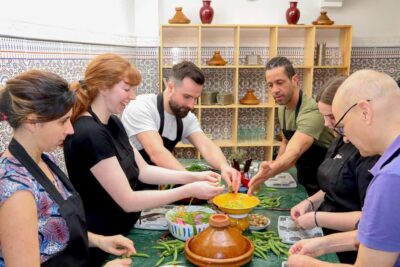
Moroccan Dishes Cooking Class with a Local Chef
Read our review →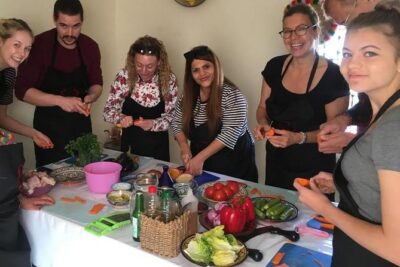
Moroccan Cooking Class & Marrakech Market Visit with Chef Khmisa
Read our review →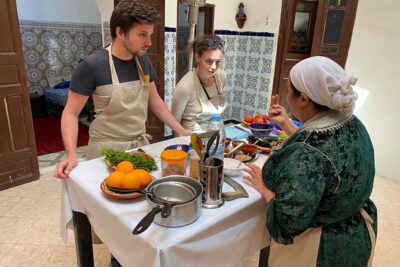
Half-Day Cooking Class with Local Chef Laila in Marrakech
Read our review →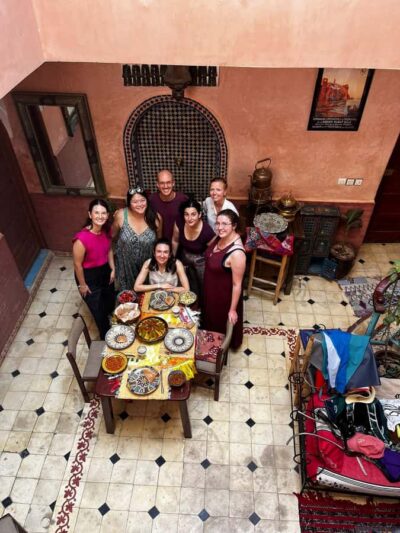
Browse the lists this tour appears in