
Reviewed · CASABLANCA TOURS
15 Days Morocco Private Grand Tour From North To South Starting From Casablanca
What makes this tour so interesting is the way it strings together Morocco’s big highlights, from Casablanca to the Sahara, and then pushes on to the Atlantic coast. I like how the route covers both the imperial-city classics and the smaller places that help you understand how the country works. I also love that you get a proper desert overnight, with a camel ride and a private camp setup, not just a quick stop.
One thing to consider is the pace. This is a north-to-south sweep, so you will spend meaningful hours in the car between regions, and some days can feel like you are on the move more than you are hanging around.
Key reasons this tour is worth your attention
- A true north-to-south circuit, mixing imperial cities, Rif mountain towns, desert routes, and Atlantic beaches
- One night in the Sahara with a camel ride, plus a luxury-style camp with a private tent that includes toilet and shower
- Guided medina time in Fes and Marrakech, where you really want a local to steer you through the maze
- A Roman-to-Medina itinerary, with stops like Volubilis and the historic cores of multiple cities
- Meals that actually help, with 15 breakfasts plus 3 included dinners to keep costs down
- Private transportation and pickup/drop-off, so logistics do not eat your vacation time
Price and value: what $1,825.27 covers on the ground
At $1,825.27 per person for about 15 days, this tour sits in the “good value for a private, full-route Morocco trip” category. You are paying for more than a list of sights. You are paying for daily private transport, a driver/guide, and 14 nights of lodging across hotels and traditional riads, plus the big-ticket desert experience.
This matters because Morocco travel can get complicated fast when you are switching cities. With everything arranged, you spend your energy on walking, eating, and taking photos, not on figuring out routes, timing, and ticket lines.
The only place you should expect extra spending is admissions and discretionary meals and beverages. Some sights are marked free, while others are not included (for example Hassan II Mosque, Bahia Palace, Jemaa el-Fnaa area entries, and Rissani market days if applicable). Also, tips are not included.
If you like structured days but still want freedom in medinas and small towns, this is a solid fit.
Set these Casablanca options side by side
- From Marrakech: Casablanca Tour with Hassan II Mosque Visit
★ 4.7 · 4,756 reviews - Casablanca: Hassan II Mosque Premium Tour with Entry Ticket
★ 4.5 · 2,971 reviews - Casablanca City Tour with Hassan II mosque ticket
★ 5.0 · 2,480 reviews
Casablanca, Hassan II Mosque, and a fast start to Morocco’s modern face
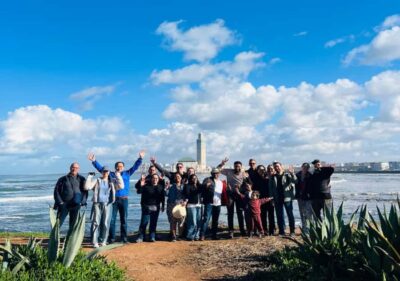
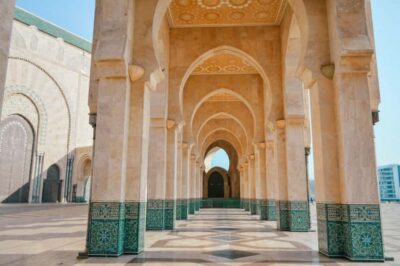
Your trip begins in Casablanca, landing at Mohammed V Airport, then heading into the city. The first major stop is Hassan II Mosque, one of Morocco’s most famous modern landmarks. It sits on the Atlantic edge and has a minaret that is the tallest structure in Morocco. One practical reason I like starting here is that the visit gives you a clear first impression of how Morocco blends old craftsmanship with modern scale.
You will join a guided tour there, and it is one of the few mosques where non-Muslims are permitted to enter. That makes it a key “first day win,” especially if this is your first time in a Muslim place of worship.
Budget note: admission is not included for this stop. If you care about keeping your daily cash spending low, plan for at least a couple of entrance fees over the course of the trip.
Overnight is in a hotel.
Rabat and Asilah, with Roman ruins and a calmer rhythm near the Atlantic
Next comes the mix of Rabat and Asilah. Rabat gives you medieval layers through places like Chellah Necropolis, where you can see Roman and Islamic ruins in one sweep. You also pass through the Kasbah des Oudaias area, which is Rabat’s older core.
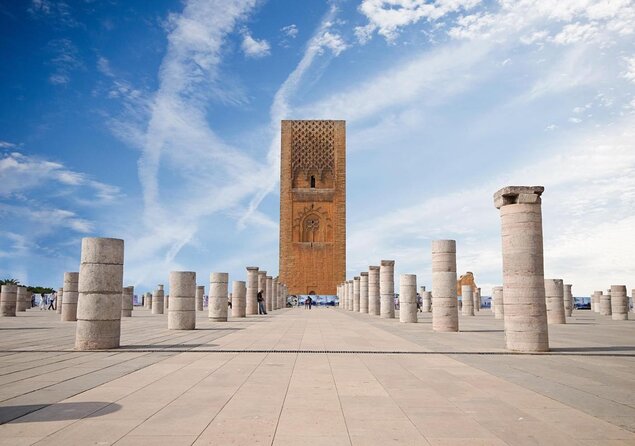
Then you get to the Hassan Tower, the incomplete minaret tied to the mausoleum of Mohamed V. Admission is free for this stop, which is a nice bonus.
After Rabat, you drive to Asilah, a fortified Atlantic town with Portuguese-era traces. It is one of those places where the city walls and historic buildings make it feel immediately different from larger Moroccan cities. It also slows the day down just enough to reset before you move on to Tangier and the Rif.
Overnight is in a hotel or traditional riad.
Tangier and Chefchaouen: the northern gateway to blue mountain days
Tangier is the entry point mindset. It is a city shaped by Europe and Morocco’s trading history, with a compact medina and a small Kasbah you can walk through fairly easily. If you want time to wander without rushing, Tangier is manageable on your own with a simple, sign-based route.
You also have an optional stretch outside town: Cap Spartel and the Cave of Hercules area, which takes around an hour if you want to see the main cave experience and connect it to the dramatic coastline view. Even if you do not go, Tangier still works as a mental warm-up before the mountains.
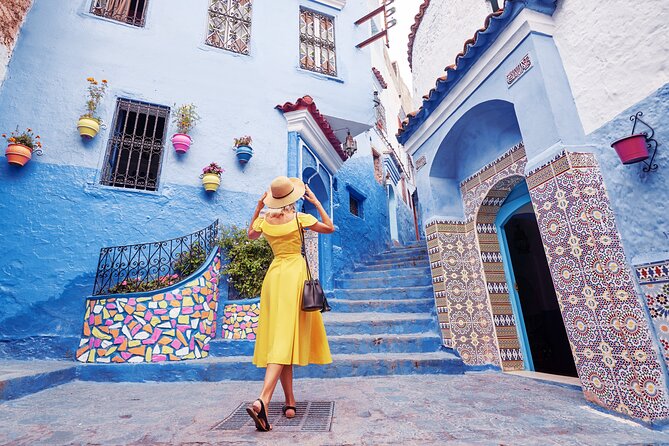
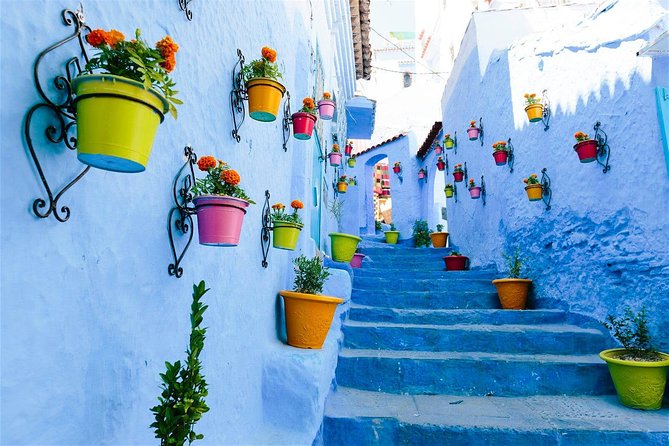
Then you hit the big mood shift: Chefchaouen. After checking into your riad, you have free time to explore the blue lanes at your own pace. The medina is mostly about walking slowly. Outa el Hammam is a key square for watching daily life, and you can also wander toward quieter alleyways to get away from the most tourist-heavy corners.
Chefchaouen has a small “best time” tip that pays off: wake up early if you can. The town can glow in soft morning light, and you can also watch sunrise over the mountains from the Spanish Mosque area.
Overnights continue in hotels or traditional riads.
If the Casablanca plan still has a gap:
- Casablanca: City Tour with Hassan II Mosque Entry Ticket
★ 4.6 · 1,137 reviews - Private Tour of Casablanca with Hassan II Mosque Entry Ticket
★ 5.0 · 1,102 reviews - Marrakech Day Trip with Camel Ride from Casablanca
★ 5.0 · 740 reviews - Casablanca: Hassan II Mosque & City Highlights Tour
★ 4.5 · 573 reviews
Akchour waterfalls hike: a Rif day that actually feels like Morocco
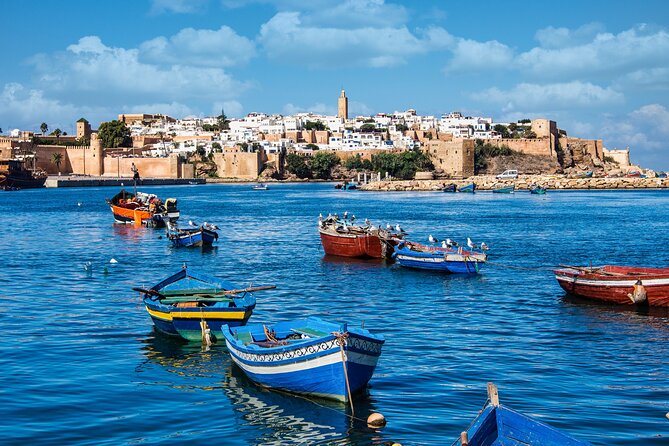
Chefchaouen is not only for photos. On a full day, you go into the Rif Mountains for a hike to Cascades d’Akchour. This is where you trade city walls for cedar trees and cooler air. You will also see smaller waterfalls along the route, and depending on the conditions, you might even have a chance to refresh in the water.
There is also a natural rock formation option called God’s Bridge, reachable by a steeper path if you feel like earning your views. Even if you do not hike to the bridge, you still come away with the feeling that you visited something beyond the blue medina.
Once back in Chefchaouen, you can end the day with a medina market walk, plus people-watching in traditional clothing. Dinner is on your own, so this day is flexible if you want a simple meal close to your riad.
Volubilis, Moulay Idriss, and Meknes: Roman ruins to royal gates
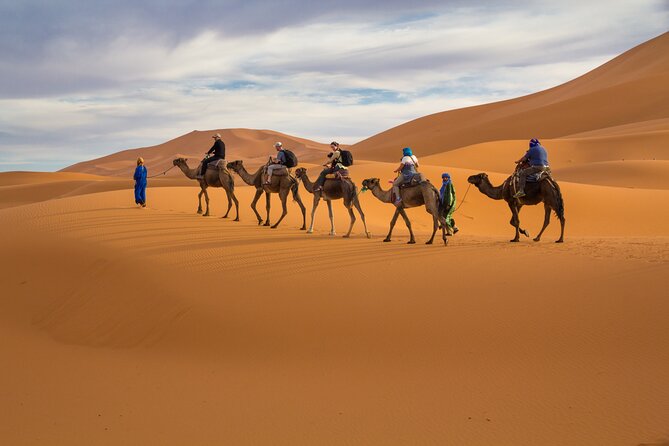
When you leave Chefchaouen, you head south toward Fes with a classic road-trip backbone: Volubilis, Moulay Idriss, and Meknes.
Volubilis is Morocco’s best-preserved Roman ruins. The point is not just big columns. It is the detail, like mosaic patterns and merchant-area homes that give you a sense of daily life in Roman times. If you enjoy history, this is the stop that makes the story feel real.
Then you move to Moulay Idriss, a pilgrimage-linked town founded in the late 700s. It sits on a slope, and the round minaret is a distinctive visual landmark. This is one of those stops where you can keep it simple, eat lunch locally, and soak up the scale of smaller Moroccan towns.
Meknes comes next, and it is a nice counterpoint to Fes. Its medina is smaller, and the vibe tends to be less frantic. You get to see the Ville Impériale area, including Bab al-Mansour and the Mausoleum of Moulay Ismail, plus royal stables. It is also a fun “spot the details” stop because many structures used materials sourced from Volubilis.
Overnight lands back in Fes, usually in a riad inside the medina.
Fes el-Bali: how to handle the world’s most complex medina
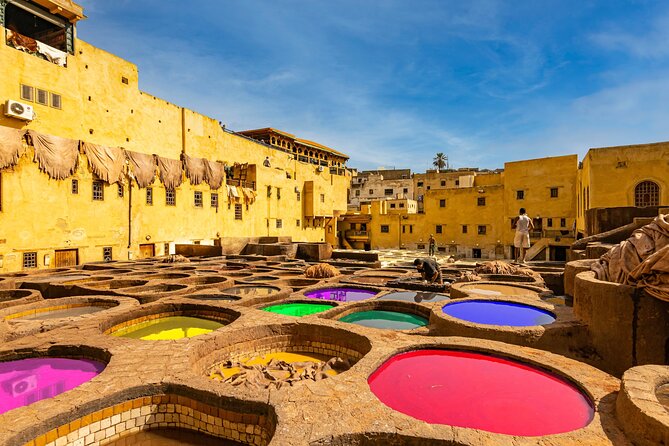
Fes is the big one, and it rewards patience. Your day focuses on Fes el-Bali and Fes el-Jdid, guided so you can actually understand the city structure instead of just wandering in circles.
Talâa Kebira is the main thoroughfare to orient you. From there, you move into narrower streets toward the Chouara Tannery. One practical trick is to get a rooftop view. It helps you see what is happening without being right in the thick of it.
You will also see Al-Qarawiyyin University, one of the oldest universities in the world. And you visit places like Al Attarine Madrasa, which gives you another layer of Moroccan craftsmanship and design.
If you are sensitive to smells, plan your pace. Tannery areas can be intense. The good news is that with a guide, you can choose the route, keep your time short in the strongest areas, and then move on to the more relaxed stops.
Overnight stays in the Fes medina riad.
The long drive to the Sahara: Middle Atlas, cedar forests, and Ziz Valley
After Fes, you move toward the Sahara, and this is where the tour’s rhythm changes. Today is built around scenery breaks so the drive does not feel endless.
First comes the Middle Atlas crossing, with stops around Azrou and cedar forests. If you like wildlife at roadside pauses, you might see Barbary macaques around the cedars near the road. Then you stop for lunch in Midelt, a cold high plateau area known as Morocco’s Apple City.
Next you follow the route into the Ziz Valley, part of the ancient trade route system. You begin noticing ksars, fortified houses built to protect goods like gold, salt, and spices. It is a reminder that the Sahara routes were not just about sand. They were about protection and commerce.
As you get closer to Merzouga, sand becomes the visual theme. You arrive prepared for a desert camp experience near Erg Chebbi.
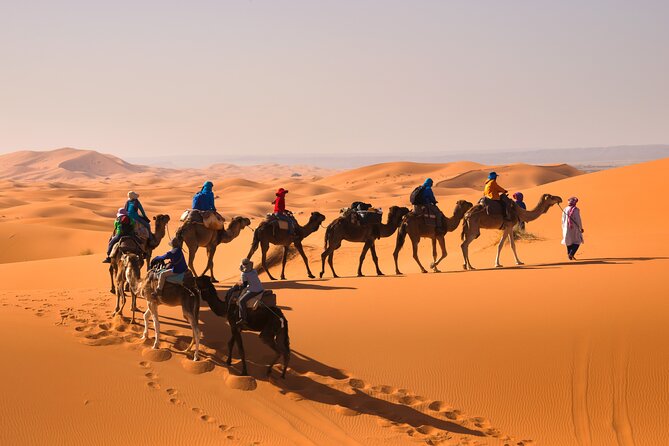
Later, you ride camels to the camp so you arrive close to sunset. Then you get the classic reward: sand dunes tinted by the day’s last light, followed by dinner and an overnight in the camp.
Merzouga desert days: sunrise, nomads, and the people side of the dunes
The next day is a full desert excursion.
If you wake early, you can catch sunrise over the dunes, a simple reward that makes everything feel more worth it. After breakfast, you travel to parts of the desert that show different textures and use. You might see the Merzouga area lake, and then meet nomads and their animals, sip tea, and learn how traditional life continues in this region.
You also drive parts of the route linked to the Paris-Dakar rally era. If you are into off-road history, it adds a modern connection to the older caravan routes.
Along the way, the itinerary includes visiting Mifis mines and then stopping in or near Khamlia village, associated with black Berber communities originally connected to Mali and Niger. You may hear music and see dance there. This is one of those moments where the desert is not just a photo backdrop. It is people, rhythm, and tradition.
You sleep again back in the desert area lodging before returning toward cities.
Rissani markets, Erfoud fossils, Todra gorges, and the road to Dades
You leave the desert and head to Rissani, a former caravan stop. If your schedule lines up with market days (Tuesdays, Thursdays, and Sundays), you can visit the souk. The market entry is not listed as included, so treat it as an extra cost depending on the day and local rules.
Then you continue to Erfoud, known for fossil mining and date festival. There are also craft stops connected to how fossil-rich rock becomes finished objects. Even if you do not buy anything, the process explanation is useful for understanding why these items are not cheap souvenirs. They are based on actual local materials and labor.
Next, the tour reaches Todra Gorge. This is a dramatic narrow corridor with cliffs rising around 300 meters. It is a climbing favorite, but it also works well just for walking viewpoints if you want to keep the day relaxed. From Todra, you travel to Dades Valley and see rock formations nicknamed monkies fingers, plus mud kasbah scenes.
Dinner and rest happen in the Dades area.
Rose town, Skoura palms, Ouarzazate, and Ait Ben Haddou
Day 11 is a smooth transition from valleys into kasbah country. You pass through El Kalaa Mgouna, often called Rose town. Over 400 tonnes of rose petals are picked in spring for processing into rosewater and perfume-related products. If you time travel near May, you are more likely to catch the rose festival atmosphere, though the tour description notes it is held every May.
Then you travel toward Skoura, surrounded by thousands of palm groves. The kasbahs here are some of the classic southern Morocco visuals.
Ouarzazate is next, with the nickname Hollywood of Africa because of its film studios. Even if you are not a movie fan, it is a useful fact. It explains why some architecture and filming locations look so staged, in a good way.
Finally, you reach Ait Ben Haddou, the UNESCO kasbah site that shows up in many films and photos. You get free time and lunch in the village, so you can explore at a walking pace rather than rushing through walls and stairs.
Overnight is based on the route’s hotel plans in this region.
Marrakech medina with a private guide: Bahia, El Badii, Saadian tombs, and Majorelle
Marrakech arrives after a dramatic shift in scenery. The difference is instant: more people, more shops, more noise, more “medina energy.”
The tour includes a local private guide in Marrakech medina. That is a big deal. In a place like this, a guide does not just save time. They help you understand what you are seeing, so your wandering becomes meaningful.
You visit the Bahia Palace area first, with lively souks and maze-like alleys. The guide also points out details like djellabas, babouches, lantern work, and spice displays, plus you learn the stories behind neighborhoods like the Mellah.
Admission for Bahia Palace is not included, so keep that in mind.
In the afternoon, you continue into other major highlights like El Badii Palace and the Saadian Tombs. Then you add Majorelle Gardens, a famous garden property associated with Jacques Majorelle and later Yves Saint Laurent.
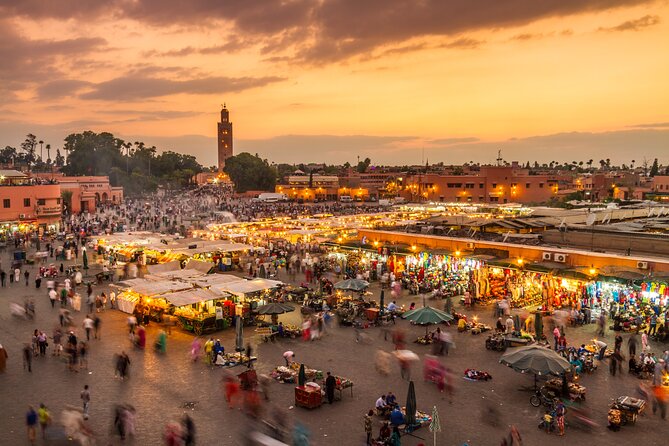
At night, Jemaa el-Fnaa comes alive. You walk among musicians, storytellers, acrobats and dancers, and you may see snake charmers. The easiest way to enjoy it is to eat while watching from above, since the square itself can be tight and loud. Entrance for related palace or garden areas may not be included, but the food stalls and street atmosphere are part of what makes the night unforgettable.
Essaouira Atlantic break: harbor photos, Scala ramparts, and argan-country stops
After Marrakech, you head west to Essaouira, Morocco’s more laid-back Atlantic side. The route includes rolling plains and possible stops in argan forest country. If you see goats climbing trees to graze argan fruit, that is a memorable signal you are in the real argan region.
There is also an optional Argan Oil Cooperative stop, where you can learn how the oil is extracted from the nut. This can be a helpful reality check, because argan oil is expensive, and the process explains why.
When you arrive in Essaouira, you stroll the harbor where fishermen sell fish directly from their boats, then visit the fortified harbor Scala area for photos. The Bab al Mersa port gate is another classic photo stop tied to the old city’s walls.
Essaouira is also a UNESCO old-town area. The day stays flexible because you can choose how much time to spend inside the medina lanes versus lingering by the sea.
Casablanca finale via Safi and El Jadida, then a last walk by the Corniche
On departure day, you head back toward Casablanca but you do not return by the fastest route. You stop in Safi, a coastal town known for pottery and ceramics. You visit Ksar el Bahr, often called the Sea Castle, and then you walk the walkway for port and ocean views. That is the kind of photo stop that feels worth it because it breaks up the drive and gives you a different coastline perspective.
Then you stop in El Jadida for the Portuguese cistern, plus a chance to walk the ramparts and visit the Church of the Assumption. This is a nice historical palate cleanser before your final night in Casablanca.
Once back in Casablanca, you can explore the Old Medina, stroll the Corniche, and go to Rick’s Café for a meal or at least a quick look, depending on your schedule. Then you drive to the airport for departure.
Accommodation, meals, and daily comfort you will actually feel
This tour includes 14 nights in hotels or traditional riads. Traditional riads are often a highlight because they create a calm base inside active medinas. The desert night camp is the “big comfort upgrade” portion of the trip: you get a private tent with toilet and shower, which is a big win compared to basic desert camps.
Meals are also thoughtfully included. You get breakfast every day listed (15 breakfasts) and dinner is included for 3 days. That helps both your energy levels and your budget.
You also get fresh bottled mineral water on board while touring. It seems small, but on long drive days, it reduces the daily hassle.
Tips and drinks are not included, so keep some cash set aside for the driver, guides, hotel staff, and restaurant staff.
Who should book this private tour
This fits best if you want:
- A full country sweep without juggling transport yourself
- Guided help in Fes and Marrakech medinas, where directions and “what to look at” matter
- A real desert overnight with a camel ride and private camp facilities
- A mix of history (Roman ruins, UNESCO sites), craft culture (markets and artisan work), and coastal time
It may not fit if you hate long car days or if you want very slow travel with lots of free time in only one region. This route is built for variety and movement.
Should you book? My practical take
I would book this if you want one organized plan that takes you from Casablanca down through imperial cities, across the Rif, and into the Sahara, then finishes with an Atlantic coastal mood. The value comes from the private logistics, included breakfasts, guided medina support, and the desert night camp with a private tent and shower.
Before you commit, be honest about your tolerance for driving. Morocco is huge, and this itinerary covers a lot of ground in 15 days. If you can handle that, you will come away with a strong sense of the country, not just a handful of famous stops.
FAQ
What is the starting point and approximate duration?
The tour starts in Casablanca, Morocco, and runs for about 15 days.
How many nights of lodging are included?
Accommodation is included for 14 nights in hotels or traditional riads.
Are breakfasts and any dinners included?
Yes. Breakfast is included for 15 days, and dinner is included for 3 days. Other meals and drinks are not listed as included.
Is airport pickup and drop-off included?
Yes. The package includes airport arrival and departure, or hotel pickup and drop-off.
Do I get a desert camel ride and a desert camp overnight?
Yes. The desert adventure includes a camel ride and a luxury night camp with a private tent that has toilet and shower.
Are there local guides included in major medinas?
Yes. Local city guides are included in Fes and Marrakech Medina.
Are attraction tickets included for everything?
Not always. Some admissions are listed as not included, such as Hassan II Mosque, and some other stops may also have tickets not included. Other stops are listed as free.
Is this a private tour?
Yes. This is a private tour, and only your group participates.
What is the cancellation policy and what happens if weather is poor?
You can cancel for free up to 24 hours in advance for a full refund. The experience requires good weather. If it is canceled due to poor weather, you are offered a different date or a full refund.
Just reviewed around Casablanca
- 10 Days Tour From Casablanca, Morocco★ 5.0 · 28 reviews
- Casablanca to Tangier Day Trip By High-Speed Train and Camel Ride★ 4.5 · 30 reviews
- Half Day Private Casablanca City Tour★ 4.5 · 30 reviews
- 12 Days From Casablanca- Cultural Immersion Tour★ 5.0 · 31 reviews
- Private Day Trip to Rabat Departure from Casablanca★ 5.0 · 33 reviews
- Religious Casablanca: Private Spiritual Tour Including Hassan II Mosque Visit★ 5.0 · 33 reviews
- Private Casablanca Market Tour and Cooking Class with Chamsi★ 5.0 · 33 reviews
- 3 Days Chefchaouen and Fez from Casablanca Private Tour★ 5.0 · 34 reviews
Casablanca Tours, compared.
Hassan II Mosque Premium Tour with Entry Ticket
Read our review →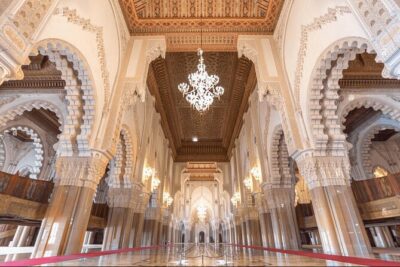
Casablanca City Tour with Hassan II mosque ticket
Read our review →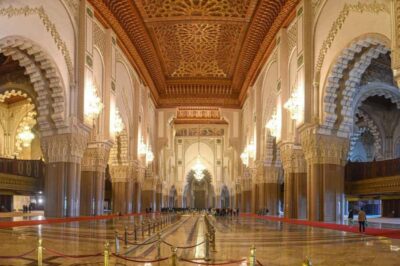
Private Tour of Casablanca with Hassan II Mosque Entry Ticket
Read our review →
Marrakech Day Trip with Camel Ride from Casablanca
Read our review →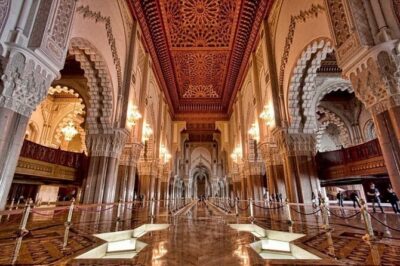
Browse the lists this tour appears in