
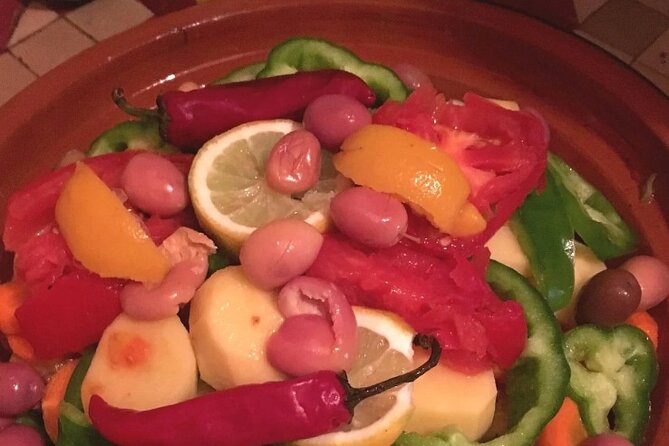
Reviewed · COOKING CLASSES
Traditional Moroccan Cooking Class
This is interesting because it flips the usual cooking-class formula. You start in Essaouira’s old medina markets, pick ingredients with Fatima, then cook and eat in a real home kitchen with Moroccan mint tea.
I love that the lesson is hands-on, starting with what goes into the pot, not just what happens after. I also love the step by step way couscous and tagine get taught, plus the extra breads and soup flavors that round out the meal.
One possible drawback to note: pastilla is not included. It’s mentioned as taking too much time, so you should mentally plan on learning other classic dishes instead.
Key things I’d book this for
- Market shopping with local ingredient choices (spices, fresh produce, and what you bring back to the kitchen)
- Fatima’s home cooking lesson with a warm, welcoming setup
- Couscous and tagine taught step by step
- Mint tea at arrival and again when you sit down to eat
- Small-group feel for a private experience with just your group
From Bab Marrakech to the market plan
I like a food tour that starts where the choices happen, not where the meal is already halfway cooked. This one begins at Parking Bab Marrakech, right by Place Bab Marrakech. From there, you head into the old medina and connect with the market side of Moroccan cooking right away.
The rhythm matters. You get time to see the stalls first, then buy fresh ingredients while everything is still in “decision mode.” If you usually skip markets on trips, this class gives you a reason to slow down and look closely.
You can also expect the timing to feel practical. It runs about four hours and starts at 9:30 am, which is a sweet spot in Essaouira. You get the morning market vibe without ending your day in a full evening rush.
More Cooking Classes in Essaouira:
- l’Atelier – Moroccan Cooking Workshop in Essaouira
★ 5.0 · 110 reviews - Essaouira: Traditional Family Style Moroccan Cooking Class
★ 5.0 · 58 reviews - Marrakech: Moroccan Cooking Class with Pickup
★ 4.6 · 1,862 reviews
Shopping for spices and produce like you mean it
The heart of this experience is the ingredient run. You’re not just tagging along to a market for photos. You go shopping in the local markets of Essaouira and buy the fresh items you’ll actually cook.
What I like here is that the shopping is tied to outcomes. When you pick spices, herbs, and produce, you get a direct sense of how Moroccan flavor gets built. You’ll also learn what to look for in quality, especially around spice freshness and how people shop there day to day.
A few practical notes for you to enjoy it more:
- Go with a curious mindset, not a strict shopping list. Fatima guides the choices, and some days may shape what you end up cooking.
- Expect sensory overload in a good way. Moroccan markets are loud, colorful, and full of smell. The goal is to pay attention to how the spices are used later.
- If you’ve ever wondered how people grind spices and build sauces from scratch, this is where you see the connection.
One review even mentions buying a bird for a dish, and another highlights spices being ground for your own meal. That’s the kind of “full-circle” detail that makes this feel more like learning than watching.
Moving from the medina to Fatima’s home kitchen
After the market, you go back to the home where the cooking happens. Fatima welcomes you with Moroccan mint tea, the kind that signals, in plain human terms, relax, you’re here now.
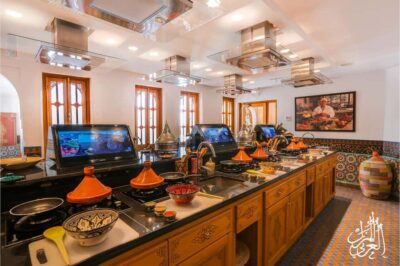
This is one of those experiences where the setting changes how the lesson lands. A home kitchen means less theater and more real workflow: where ingredients go, how hands move, what gets prepared first, and what gets left to simmer while you do something else.
From the feedback you can also tell Fatima’s teaching style is patient and encouraging. People call out her warmth, her willingness to answer questions, and how she keeps things relaxed even while you’re doing hands-on cooking.
You should also know this is a private tour/activity. Only your group participates, so you aren’t stuck listening to someone else’s questions all lesson long. That matters in a home kitchen, where attention and space help you actually learn.
The cooking lineup: tagine, couscous, and more classics
The plan centers on classic Moroccan dishes, with a step-by-step approach. You’ll be taught how to cook dishes such as tagines, couscous, Harira (Moroccan soup), and Moroccan bread.
In a typical session, I’d expect the core experience to include couscous and a tagine. Many people specifically mention couscous and tagine as what they prepared together, and that makes sense because those two are teaching magnets. Couscous teaches the grain and steam structure. Tagine teaches sauce logic and how flavors marry over time.
And then there’s the “side character” element that makes your meal feel complete. Reviews reference dishes like aubergine salad and zaalouk, plus vegetable tagines. Even when the exact menu shifts, the pattern stays the same: you learn how to build Moroccan flavor across vegetables, grains, and spiced sauces.
Set these Essaouira options side by side
- Essaouira: Surf Lessons
★ 4.9 · 412 reviews - Kitesurfing Lessons in Essaouira Beach
★ 5.0 · 206 reviews - Surf Lesson in Essaouira
★ 5.0 · 179 reviews - Group Kitesurfing lesson with a Local in Essaouira Morocco
★ 5.0 · 175 reviews
Couscous taught the way you actually want it
Couscous is rarely hard in theory. The trick is timing, texture, and the way sauce and steam work together. With Fatima, the couscous part is described as step by step, which is exactly what you want if you’ve only had couscous as an already-made side dish.
Here’s why that matters for you: once you understand the steps and how to recognize the right texture, you can repeat it at home without guessing. That’s the real value of a cooking class, not just tasting a good meal on the day.
Tagine basics that turn into confidence
Tagine cooking is a mix of technique and intuition. You learn about ingredients, spices, and the order of operations. People mention learning tagine properly, plus tips for making a dish and getting the result right.
Also, the marker of a strong teacher is that you don’t just get a recipe. You get reasoning. In a tagine lesson, that means understanding how flavors develop as it cooks, and how to adjust balance while you’re working.
Mint tea, eating together, and the Berber finish
Cooking is only half the fun. The other half is sitting down and realizing you’re eating what you made, not something served by someone else who did all the labor.
You’ll enjoy Moroccan mint tea after you arrive, then you’ll appreciate your work at the end with Berber mint tea. That tea ritual is more than a nice touch. It slows the tempo. It gives you a moment to talk, ask questions, and taste with context.
What I like about this structure is that it feels like a complete experience:
- Choose and buy ingredients
- Cook with guidance
- Taste and connect flavors
- Share tea at the end
When a class ends this way, you remember it longer, and you leave with more than one dish worth repeating.
The class style: learning plus real life at the table
Even though the name is Traditional Moroccan Cooking Class, the vibe is very “real life.” People describe it as authentic and honest, like being welcomed into someone’s home rather than attending a staged workshop.
You should expect conversations as part of the experience. Several reviews mention animated, warm exchanges during the meal and between tasks. It’s not just a lecture, and that’s a good thing. In cooking, questions come naturally when you’re standing next to the cutting board.
That said, here’s your expectation check. One review notes it felt more like a meal and vegetable prep than a full cooking lecture. That’s not necessarily a dealbreaker, because hands-on prep is still learning. But if you’re the type who expects a very formal, hour-by-hour “cookbook class” with heavy explanation, you might want to come in knowing it’s more practical and collaborative.
Pastilla not included: plan around it
The experience clearly states that pastilla is not included. The reason given is timing. Pastilla is time-heavy, so the class focuses on other dishes.
So if pastilla is your top Moroccan must-eat, treat this as a class that will satisfy you with other classics: tagine, couscous, Moroccan bread, and Harira are specifically mentioned. You can always look for pastilla elsewhere in Essaouira for that dish alone, and use this class for the technique and base flavors that support Moroccan cooking across many plates.
Price and value: why $39 can make sense
At $39 per person for about four hours, this doesn’t feel like a “watch someone cook” experience. It’s priced like a learning-and-meal arc: market shopping, ingredient selection, cooking with a host, and sitting down to eat what you made with mint tea.
For value, I look at three things:
- Are you doing something active? Yes, you shop and cook.
- Are you learning repeatable methods? With couscous and tagine taught step by step, you have a base you can reproduce.
- Do you get a satisfying payoff at the table? Yes, with mint tea and the shared meal.
The reviews consistently praise the authenticity, plus Fatima’s friendliness and teaching style. When a class includes market shopping and home cooking, that authenticity is often what you pay for, and in this case the satisfaction rate is very high.
Who this suits best in Essaouira
This is a strong fit if you want a practical cultural connection. You’ll get more than flavor. You’ll learn how ingredients are chosen and how Moroccan cooking flows from market to kitchen.
I’d especially recommend it if:
- You like cooking and want techniques you can repeat
- You enjoy markets and want help turning what you see into what you cook
- You’d rather spend a half day with a local host than do a generic tasting
- You prefer a private group setup in a home environment
If you don’t care about markets at all, or you want only one dish and nothing else, you might feel pulled around by ingredient shopping. But if you enjoy learning through doing, the structure works.
A few tips to make the day smoother
No matter how easy the class is, your comfort helps your learning. Here are sensible, low-effort prep moves based on the format.
Wear shoes you can stand in. Market paths and home cooking spaces often mean a lot of time on your feet. Bring a light layer too, because coastal Essaouira can shift in temperature.
If you’re picky about flavors, this is the time to speak up. Moroccan food can be spicy or mild depending on how it’s made, and a good host can adjust for your comfort level. Also, if you have food allergies, you should tell Fatima ahead of time so you can cook safely.
Lastly, come ready to taste while you work. Moroccan cooking is built in layers. Even a small taste can help you understand what the dish is aiming for.
Should you book Fatima’s Traditional Moroccan Cooking Class?
If you want the “Essaouira cooking story” told the right way, this is a book-worthy option. The combination of market shopping with local ingredient choices and then cooking at Fatima’s home is the main reason people score it so highly. You’re not just paying for a meal. You’re paying for a method, plus a memory you can re-create at home.
I’d only hesitate if pastilla is your absolute priority dish, because it’s not part of this experience. Also, if you’re hunting for a very formal lecture-style class, you may find it feels more like shared cooking and conversation than a strict classroom.
Otherwise, at $39 for a morning start, about four hours, and a hands-on tagine and couscous focus, it’s one of the better value ways to learn Moroccan cooking without making it complicated.
FAQ
How long is the Traditional Moroccan Cooking Class in Essaouira?
It lasts about 4 hours.
Where does the experience start, and where does it end?
You start at Parking Bab Marrakech, Place Bab Marrakech, Essaouira 44000, Morocco. The activity ends back at the same meeting point.
What time does the class start?
The start time is 9:30 am.
What dishes will I learn to cook?
You will be taught how to cook Moroccan dishes such as tagines, couscous, Harira (Moroccan soup), and Moroccan bread.
Is pastilla included?
No. Pastilla is not included in this experience.
Is this tour private?
Yes. It’s a private tour/activity, and only your group will participate.
What is the cancellation policy?
You can cancel for a full refund up to 24 hours in advance. If you cancel less than 24 hours before the experience starts, the amount you paid is not refunded. The experience may also be canceled if the minimum number of travelers is not met, and you’ll be offered another date/experience or a full refund.
Just reviewed around Essaouira
- Marrakech to Essaouira / Small group day tour To Essaouira★ 5.0 · 73 reviews
- From Marrakech: Day Journey to Essaouira Mogador★ 5.0 · 74 reviews
- From Marrakech: Essaouira Day Trip with Hotel Pickup★ 4.2 · 74 reviews
- Discovery Tour around Essaouira by Electric Motorcycle★ 5.0 · 76 reviews
- Essaouira Full-Day Excursion from Marrakech★ 5.0 · 78 reviews
- Shared Full Day Tour Visit to Essaouira from Marrakech★ 5.0 · 78 reviews
- Private transfer Marrakech to Essaouira or Essaouira toMarrakech★ 5.0 · 80 reviews
- Essaouira Full Day Trip★ 4.5 · 83 reviews
Cooking Classes, compared.
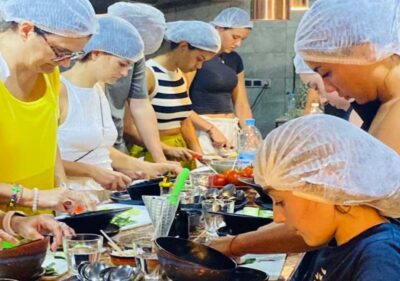
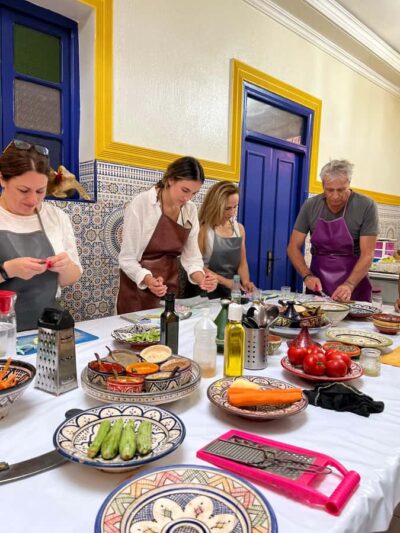
Traditional Moroccan Cooking Class & Market Visit
Read our review →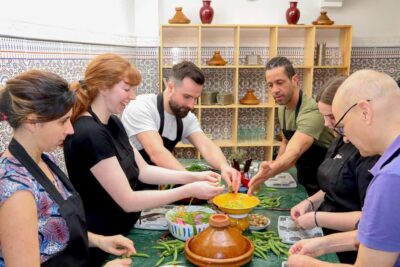
Moroccan Dishes Cooking Class with a Local Chef
Read our review →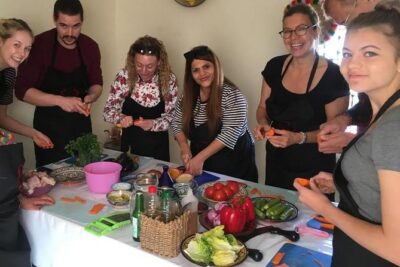
Moroccan Cooking Class & Marrakech Market Visit with Chef Khmisa
Read our review →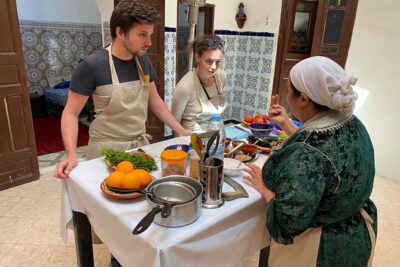
Half-Day Cooking Class with Local Chef Laila in Marrakech
Read our review →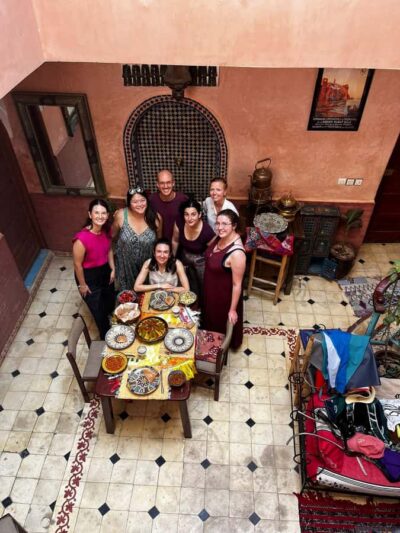
Browse the lists this tour appears in