
Reviewed · SOUKS & MEDINA TOURS
Fes: Bou Inania Madrasa, Museum, Tannery, Souk & Medina Tour
Fes is one of those cities where your eyes work harder than your legs, and a good local guide makes the whole Medina feel possible. I love how this tour brings you face-to-face with Marinid architecture at Bou Inania Madrasa, then turns around and shows the everyday crafts people still run in the souks. I also like the way you get a real look at the Chouara tannery and how leather is dyed in natural pits. The only catch is that parts of the experience include cooperative craft stops where shopping is part of the deal, so go in with your eyes open.
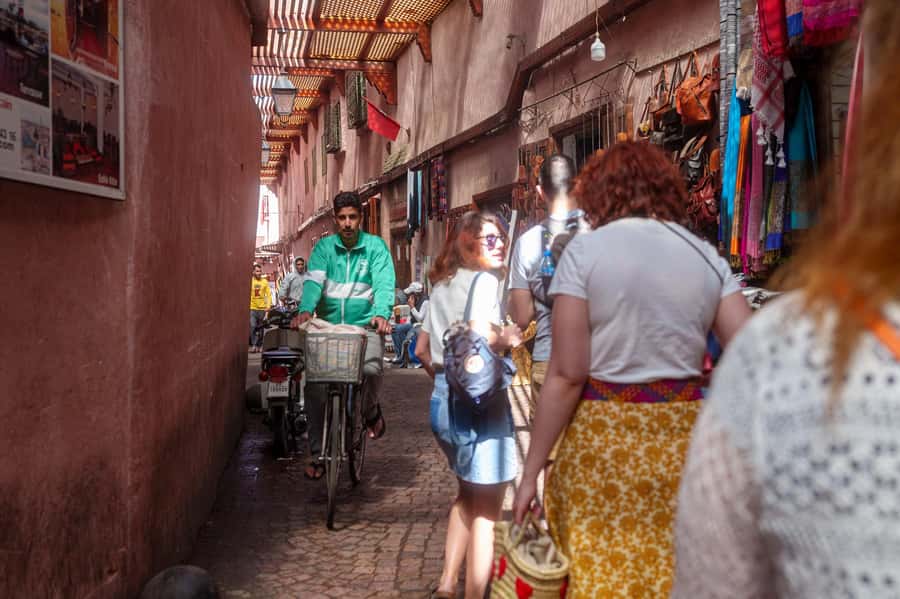
You start at Bab Bou Jeloud, the famous Blue Gate, and you move through narrow lanes with stories that connect sultans, scholars, and artisans to what you see right now. Stops are timed with short photo breaks and small windows of free time, which helps when the Medina gets crowded and you need to breathe for a minute. If you hate walking or you want to wander totally on your own, this structured flow might feel a bit tight.
Key highlights you should care about
- Bab Bou Jeloud orientation so you do not waste your first hour just trying to find the right alleys
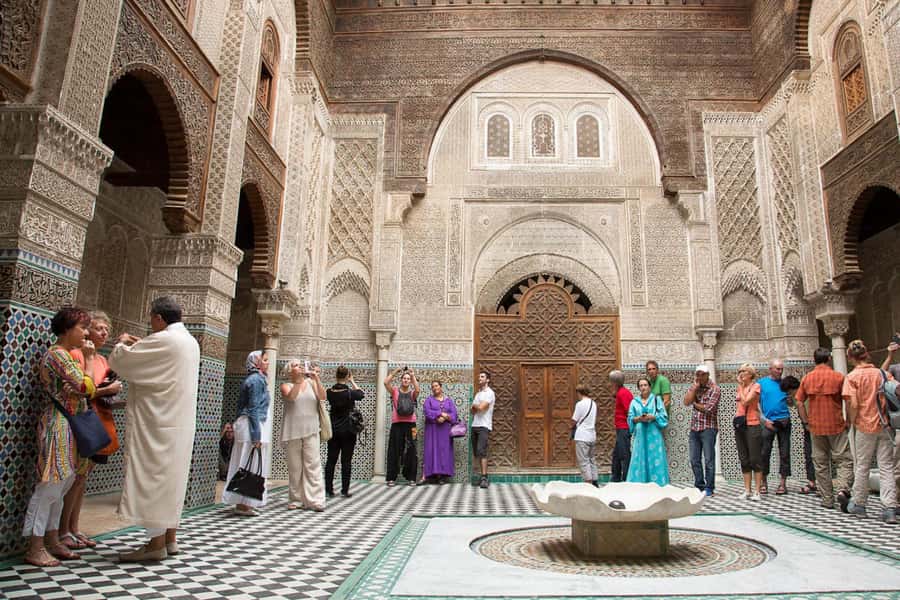
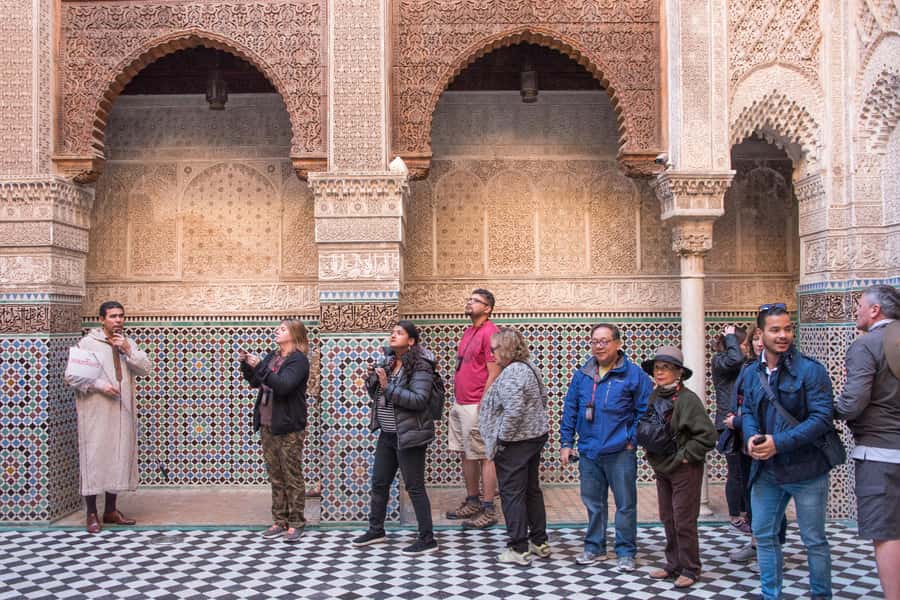
- Bou Inania Madrasa details like carved cedarwood, zellige tilework, and a calm marble courtyard
- Al-Karaouine University exterior views of one of the world’s oldest learning centers
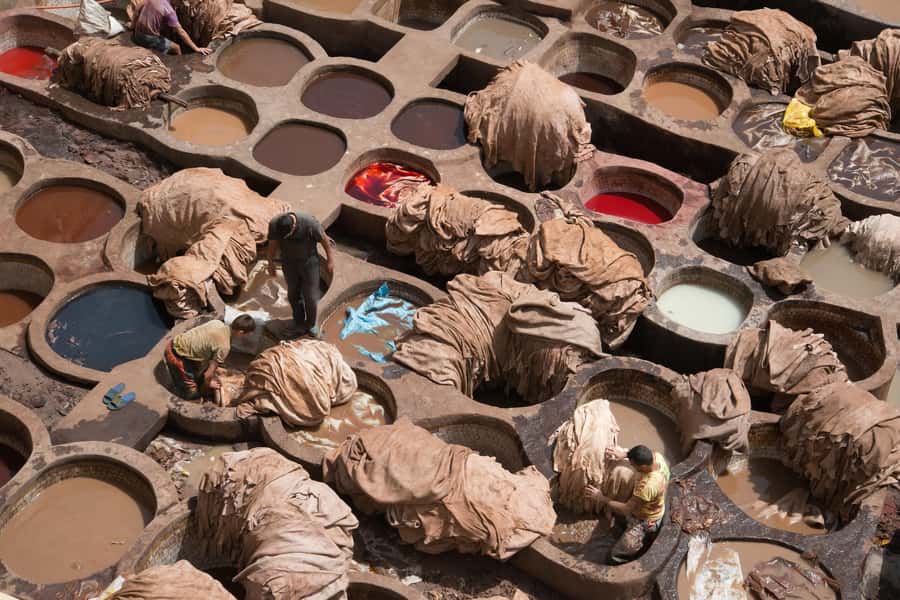
- Chouara tannery from a terrace with natural dyes like saffron and indigo being used in old-style pits
- Souks with clear shopping targets including Souk Sabaghine (textiles) and Souk El Attarine (spices and perfumes)
- Pottery and zellige tile workshop showing how ceramics and mosaic tiles get made by hand
Starting at Bab Bou Jeloud, then letting the Medina do its job
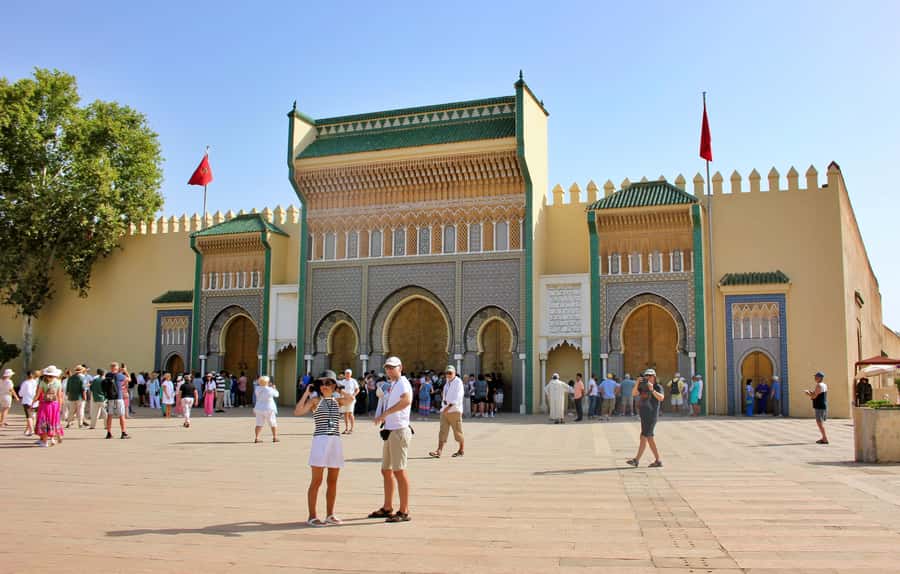
The tour begins at Bab Bou Jeloud, the Blue Gate that marks the entry point to the UNESCO-listed Medina of Fes El Bali. From there, you follow your guide through tight alleyways where landmarks pop up in unexpected places, not in neat postcard order. Even if you have been to older cities before, Fes has a way of making you feel like you just stepped into a living maze.
What I like here is the early orientation. Your guide helps you connect the streets to what you will see later, so the Medina stops feeling like random turns and starts feeling like a map built out of smells, sounds, and craft shops. The tour also builds in short breaks for photos and a bit of free time, which matters because Medina traffic is fast, noise is constant, and you will want moments to reset.
If you are the type who panics in tight crowds, this is your anti-panic plan. And if you are with kids, families in particular often appreciate that the pace is described as friendly and unrushed, with room to ask questions.
More Medina Tours in Marrakech
- Marrakech: Bahia Palace, Saadian Tombs, Souk and Medina Tour
★ 4.7 · 4,974 reviews - Marrakech: Ben Youssef, Secret Garden, & Souks Walking Tour
★ 4.6 · 2,802 reviews - Marrakech: Colorful Medina Souks Guided Walking Tour
★ 4.7 · 2,470 reviews
Dar Batha Museum of Islamic Arts, a palace turned craft classroom
Dar Batha is the kind of stop that makes you slow down. This former royal palace is now a museum focused on Moroccan arts, crafts, and history, and it gives you context for what you will later see outside in the souks. You spend time with carved wood, ceramics, and fine embroidery, which helps you understand why certain shop displays look the way they do.
The practical win is timing and mood. You hit the museum early in the tour, when your senses are still fresh, so you can actually notice details. Later, you’ll be surrounded by sales counters and workshop doors, and it is easier to tell what is handmade versus what is mass-produced once you have seen high-quality craftsmanship up close.
There is also some free time built in, so you can wander a little on your own, not just follow the guide’s finger pointing. That balance is great for people who love detail and people who need to keep the pace moving.
Bou Inania Madrasa, where cedarwood and zellige take over the room
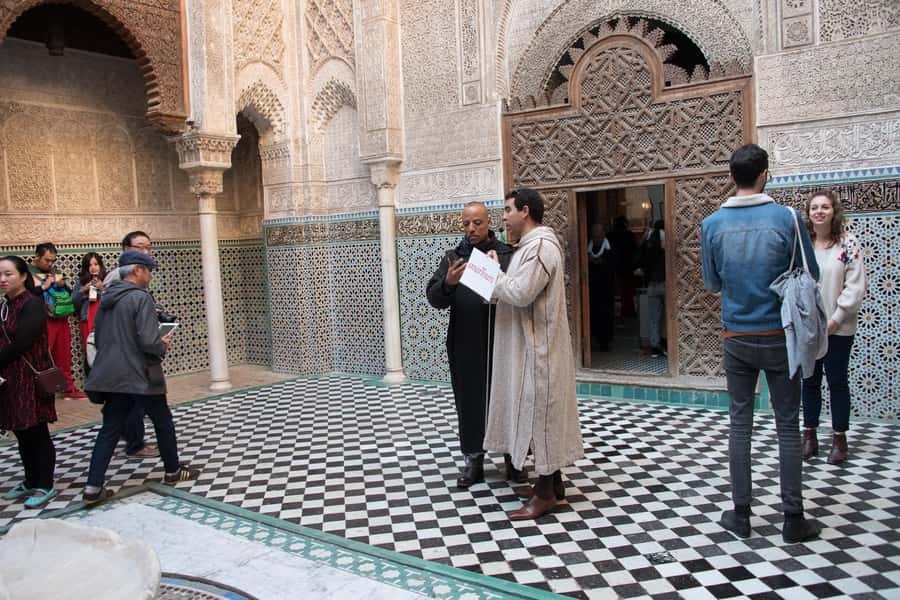
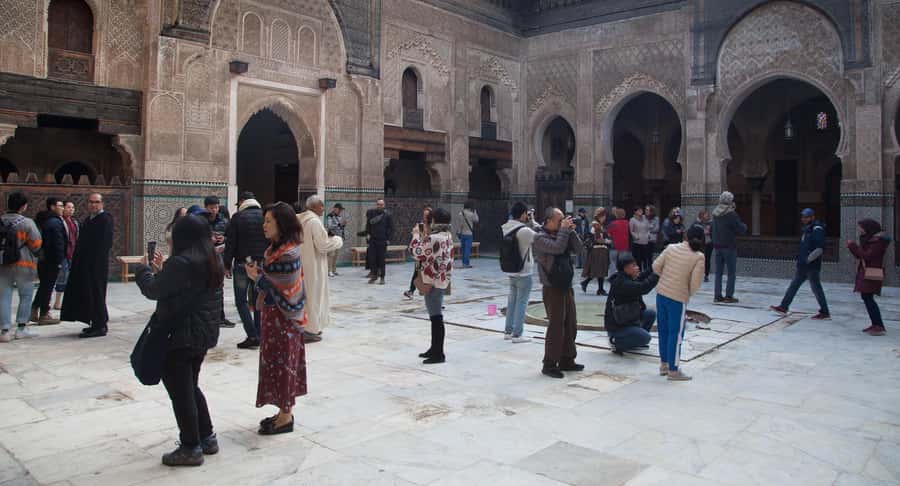
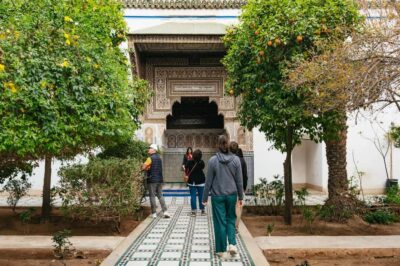
Bou Inania Madrasa is the star stop for architecture lovers. This 14th-century Marinid masterpiece is known for carved cedarwood, intricate zellige tilework, and a serene marble courtyard. It is also one of the madrasas in Fes that served as a mosque, so you feel both the scholarly and spiritual purpose of the place.
What makes this visit so rewarding is not just that it is pretty. It is that your guide helps you see the logic behind the design choices. The tile patterns are not random decoration, and the courtyard calm is not an accident. You start understanding why Fes became famous for scholarship and craft at the same time.
Plan for a real visit, not a quick walk-by. Skip-the-line access is included for selected monuments, and once you are inside you will want time to look up at wood carving and across the tile surfaces. The guided tour plus a bit of free time lets you do both, the interpretive part and the just-enjoy-it part.
Entrance tickets for Bou Inania Madrasa are extra, so budget for it. Still, for many first-time visitors, this is the monument stop that makes the whole tour feel worth the effort.
Al-Karaouine University exterior views, seeing learning you can almost feel
After Bou Inania, the tour moves to the Mosque and University of Al-Karaouine, with exterior viewing. This is one of the world’s oldest universities, and the building connection to learning is part of what makes Fes feel different from other Moroccan cities.
You should not expect a long inside visit here, because the tour description focuses on exterior sightseeing and guided explanation. But even from outside, you get a sense of the scale and importance of the institution. It helps explain why Fes built a culture where scholarship and craftsmanship were not separate worlds.
If you like understanding how cities think, this stop adds the “why” behind the craftsmanship. Your guide’s stories about scholars and sultans connect the architecture to the people who once lived in and around these spaces.
If the Marrakech plan still has a gap:
- Marrakech: Agafay Desert Sunset, Camel Ride, and Dinner Show
★ 4.6 · 35,119 reviews - From Marrakech: Ouzoud Waterfalls Guided Hike and Boat Trip
★ 4.7 · 33,630 reviews - Marrakech: Agafay Desert Quad & Camel Rides with Dinner Show
★ 4.8 · 27,382 reviews - Marrakech: Agafay Desert Quad Biking Tour with Dinner-Show
★ 4.8 · 16,569 reviews
Souks in Fes El Bali, with shopping that has structure instead of chaos
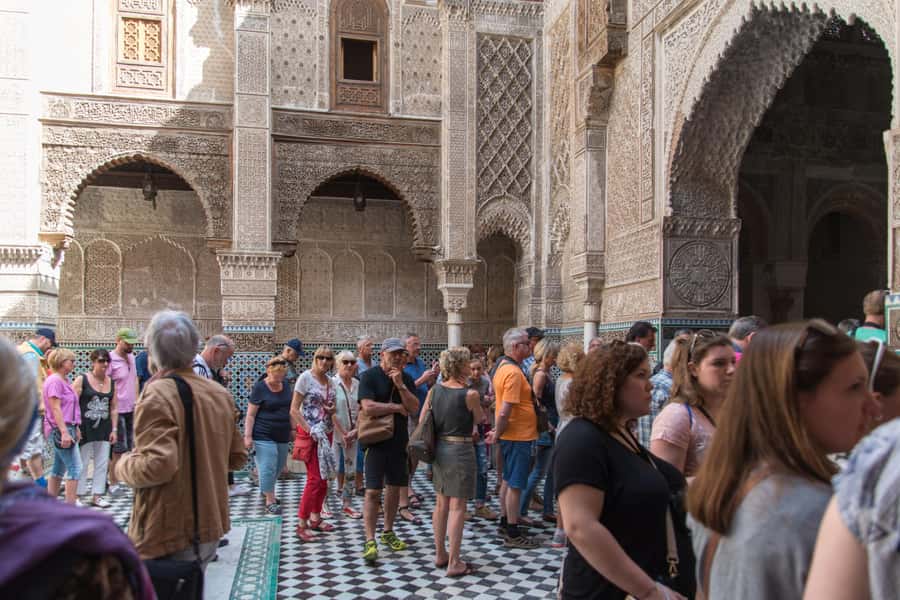
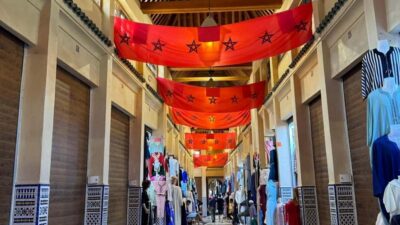
Once you are in the Medina of Fes El Bali, the tour becomes a craft and market walk. You get to explore souks tied to specific goods, which is a huge advantage. Instead of wandering until you guess you are near something interesting, you move with purpose.
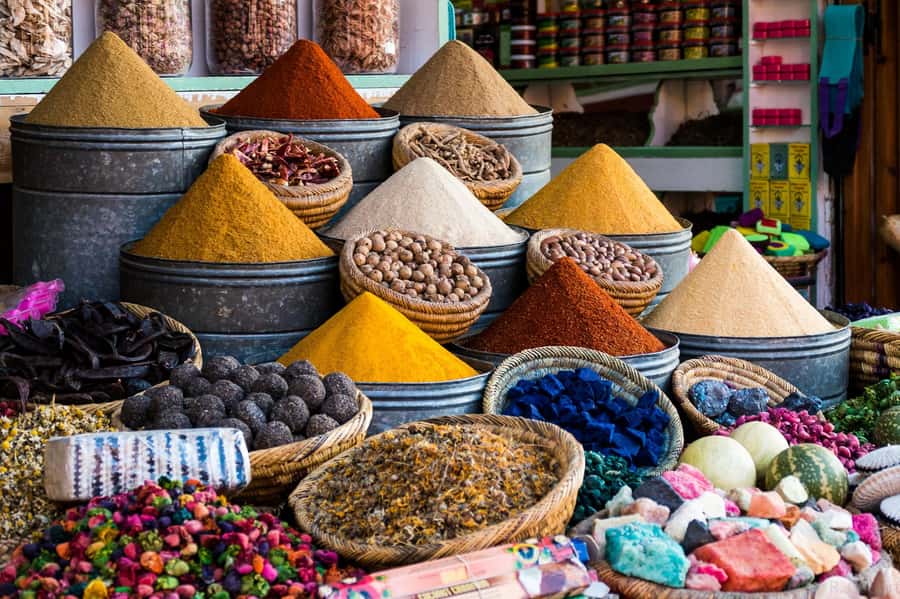
Two highlighted souks are Souk Sabaghine, known for handwoven textiles, and Souk El Attarine, filled with spices, perfumes, and herbal remedies. Near the craft streets, you may hear the rhythmic hammering from Hammam Seffarine, where metalworking traditions continue. It’s one of those details that makes the Medina feel alive, not staged.
Now, about shopping: the experience includes chances to browse and buy, and some stops are part of craft cooperatives. A couple of experiences have a sales component, and you may be gently offered items at places connected to the leather process and other crafts. The best mindset is friendly and calm, you can look, you do not have to buy, and you can politely refuse.
One helpful pattern from guides praised in past tours is how they manage the shop side. Guides like Mouanis, Houssine, and Driss were highlighted for leading you to artisans and helping avoid low-quality, mass-produced stuff. That advice matters if you want real Moroccan craft instead of the same souvenirs you see everywhere else.
Chouara tannery, natural dye pits and the view that surprises you
Chouara Tannery is both iconic and practical to see with a guide. From the panoramic terrace you can observe artisans working the leather in the famous pits. The process uses natural dyes, including saffron and indigo, and the tradition is described as unchanged since the 11th century.
Let’s talk about expectations. Leather work is not a clean demo you watch from a distance. It is active and textured, and it comes with strong sensory input. You will likely smell the tannery area, and you should go prepared with water and patience. This is one of those places where a guide helps you make sense of what you are seeing, because the leather processing is a system, not a single step.
Also, some access to the tannery experience may come through cooperatives that try to sell you products. You can handle this with small, polite boundaries. Look, ask one or two questions, and decide what you want. If you feel like the shop pitch is taking over, use your terrace time first and treat purchases as optional, not mandatory.
When the focus stays on the craft itself, Chouara is one of the most memorable parts of Fes because you see centuries-old methods still in use.
Pottery and zellige tile workshop, where mosaics start as clay
The tour ends with a workshop stop focused on pottery and zellige tilework. You see artisans mold clay, hand-paint ceramics, and cut delicate tiles into intricate mosaic designs. The idea is simple and valuable: you see how the same kind of geometric tilework that decorates palaces, fountains, and mosques gets made by hand.
This stop is great for people who love detail but do not want to guess how something gets produced. Zellige is one of those crafts that looks effortless from far away and is clearly skilled up close. Watching the tile cutting and the pattern work makes you appreciate why Fes has such a strong visual identity.
You will probably have some time to browse related workshop items, which means shopping is still on the table. But in this case, it is easier to judge quality because you have seen the labor behind it. Bring cash if you want to buy something small, like a tile souvenir or a ceramic piece, because payment options are not described in the tour data.
Price and value, what you really pay for
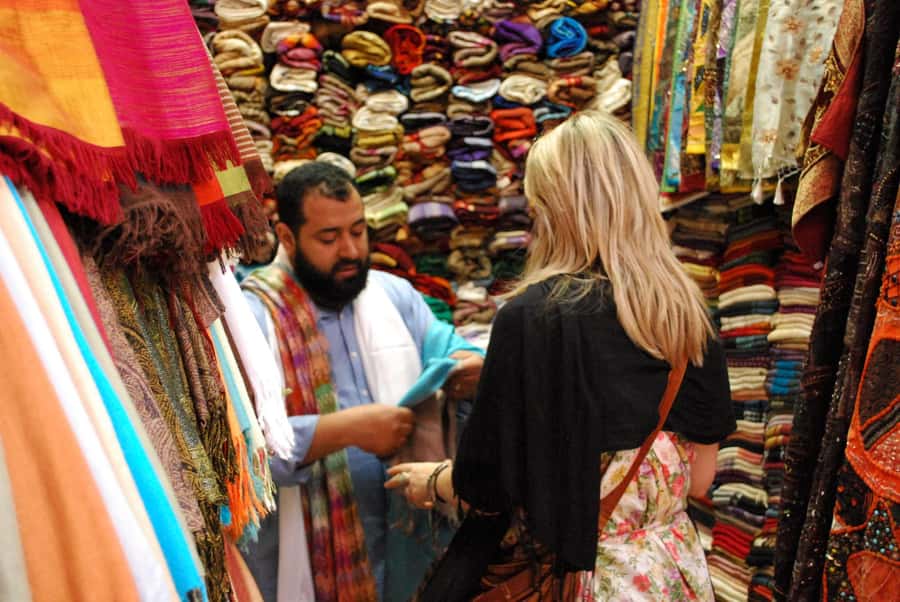
At $12 per person for a 4-hour guided experience, the pricing is positioned as a value deal. What you get included is a licensed, experienced local guide, a private or small-group walking format depending on your selected option, and skip-the-line access for selected monuments. You also get free time at each major stop to explore at your own pace.
The main extra cost is entrance tickets. Bou Inania Madrasa and Dar Batha Museum are each listed at 20 MAD per adult, so you should budget for two separate admissions if you plan to enter both. Transportation and food are not included, so you are responsible for getting there if your accommodation is outside the Medina.
For many people, the value comes down to this: you are paying mostly for guidance, not just for access. In a city like Fes, navigation and interpretation make a huge difference. You do not just see places, you learn how to read them, and that can save you wasted time and frustration.
Who should book this, and how to prep so it feels easy
This tour is a good fit if you want the big Fes highlights in one half-day, and you care about craft and architecture. It’s especially helpful if it is your first time in the Medina, because the streets are a real challenge when you are on your own.
You should also consider it if you like shopping with guardrails. Guides described in the past as friendly and patient, and focused on letting you explore without rush, can help you buy Moroccan goods that are actually made locally. If you are traveling with kids, the pace is often described as manageable for families.
Prep is straightforward, and you’ll feel happier if you follow it. Wear comfortable shoes. Bring water, sunglasses, and sunscreen. Have cash ready for entrances and for shopping at craft stops.
One more important note: the tour is listed as wheelchair accessible, but it is also marked as not suitable for people with mobility impairments. That usually means the walking environment in the Medina can be the deciding factor. If mobility is a concern, check with the provider before booking and plan for uneven surfaces and lots of stairs or narrow passages.
Should you book this Fes Medina tour?
Yes, if you want a guided introduction to the Medina that hits the key monuments and crafts within about 4 hours. The best reason to book is the pairing of big landmarks with working artisan spaces, so the city feels like it still produces culture, not just memories.
Skip booking only if you hate the idea of cooperative craft stops and prefer to walk the souks with zero structure. If you want total freedom, you might prefer independent wandering. If you want the Medina explained and made easier, this tour is a solid choice.
FAQ
What is the duration of the Fes: Bou Inania Madrasa, Museum, Tannery, Souk & Medina Tour?
The tour lasts about 210 minutes, around 4 hours.
Where is the meeting point?
Your guide meets you in front of Hotel Batha, Ave de La Liberte, Fes. If you choose pickup and your accommodation is inside the Medina, the guide may pick you up from your riad reception.
Is hotel pickup included?
Hotel pickup from your riad in the Medina is included for the private option. If your accommodation is outside the Medina, you meet at Hotel Batha.
What entrance tickets cost extra?
Entrance tickets to Bou Inania Madrasa and Dar Batha Museum of Islamic Arts are not included. They are listed as 20 MAD per adult for each.
What monuments and areas does the tour cover?
You visit Bou Inania Madrasa, Dar Batha Museum, and you see the Mosque and University of Al-Karaouine from the outside. You also visit the Chouara tannery area and explore the Medina, including souks and nearby craft streets.
Does the tour include skip-the-line access?
Yes, skip-the-line access is included for the selected monuments.
What languages are available for the guide?
The live guide is available in French and English.
What should I bring?
Bring comfortable shoes, sunglasses, sunscreen, water, and cash.
Is this tour private or small-group?
You can choose a private group or a small-group walking tour depending on the option.
Is it wheelchair accessible?
It is listed as wheelchair accessible, but the activity is also marked as not suitable for people with mobility impairments. The Medina walking environment may be a limiting factor, so plan carefully.
Can I cancel and get a refund?
Free cancellation is available up to 24 hours in advance for a full refund.
More Museums in Marrakech
- Marrakech: Majorelle Garden, YSL, and Berber Museum Entry
★ 4.6 · 5,168 reviews - Marrakech: Palace, Museum, Madrasa & Medina Highlights Tour
★ 4.7 · 706 reviews - Majorelle Garden,St Laurent & Berber Museum, Round-Trip & Tickets
★ 4.5 · 84 reviews - Fes: Museum, Al Attarine Madrasa & Tannery and Medina Tour
★ 4.6 · 1,655 reviews
Just reviewed around Marrakech
- From Marrakech: Day trip to Ouzoud waterfalls and boat tour★ 5.0 · 73 reviews
- Private horseback ride in the Palmeraie of Marrakech★ 5.0 · 73 reviews
- Marrakech to Essaouira / Small group day tour To Essaouira★ 5.0 · 73 reviews
- 1 Day Guided Tour of World Heritage Kasbah Ait Ben Haddou from Marrakech★ 3.5 · 73 reviews
- Marrakech: Authentic Local Dinner with Transport★ 4.1 · 73 reviews
- Ourika Valley Day trip: Hike, waterfall, lunch and Relax★ 4.8 · 73 reviews
- Waterfalls, Three valleys, Atlas Montains, Camels & Desert★ 5.0 · 73 reviews
- From Marrakech: 3-Day, 2-Night Merzouga Dunes Desert Trip★ 5.0 · 73 reviews
Souks & Medina Tours, compared.
Bahia Palace, Saadian Tombs, Souk and Medina Tour
Read our review →
Ben Youssef, Secret Garden, & Souks Walking Tour
Read our review →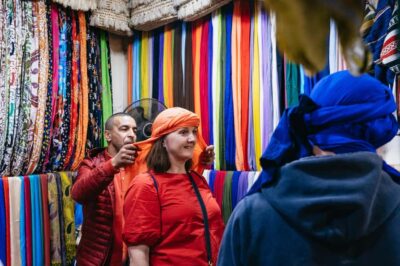
Saadian Tombs & Bahia Palace, Medina Guided Tour
Read our review →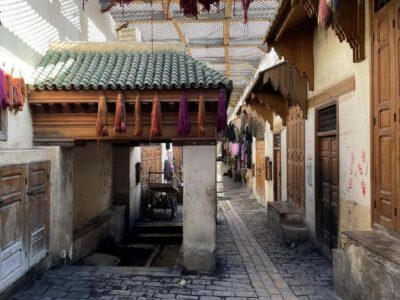
Museum, Al Attarine Madrasa & Tannery and Medina Tour
Read our review →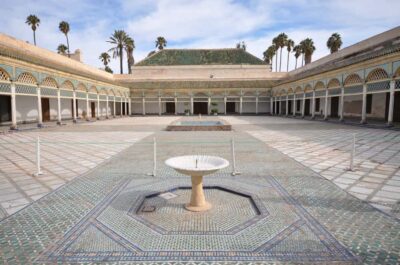
Bahia Palace, Madrasa Ben Youssef and Medina Tour
Read our review →Browse the lists this tour appears in