Reviewed · MARRAKECH TOURS
Hidden Sights of Marrakech:
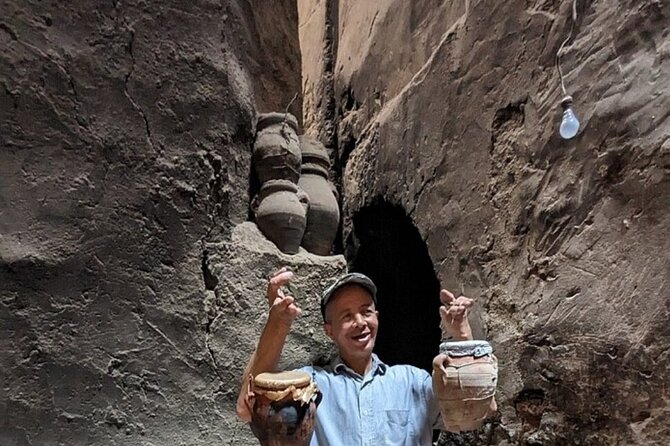
This tour is interesting because it trades the headline monuments for the everyday places that make Marrakech feel real. I love the walkable route through spots you cannot reach by car, and I love that you get a local guide and bottled water for a smooth morning. The only real drawback is that it is still a walking tour, so you should be ready for uneven streets and a steady pace.
You also get a smart setup for the rest of your trip. With guides like Mohamed and Azim, the stops come with practical stories, plus hints on how to move through souks without getting tangled up.
Key takeaways before you go
- Small group size (max 6), so you can actually ask questions and stay on pace
- Bottled water included, helpful for the Medina walk
- Free admission stops, so you can focus on the route, not ticket math
- Stops that feel behind-the-scenes, from a bakery to a caravan inn and working souk lanes
- Ends at Jemaa el-Fnaa, so you can roll straight into the evening scene
Price, time, and what $39 really buys you
The Hidden Sights of Marrakech tour runs about 3 to 4 hours and costs $39 per person. For that price, you are not just paying for a “see the highlights” loop. You are paying for a guided walking route through the Medina’s less obvious corners, with both a local guide and a professional guide, plus bottled water.
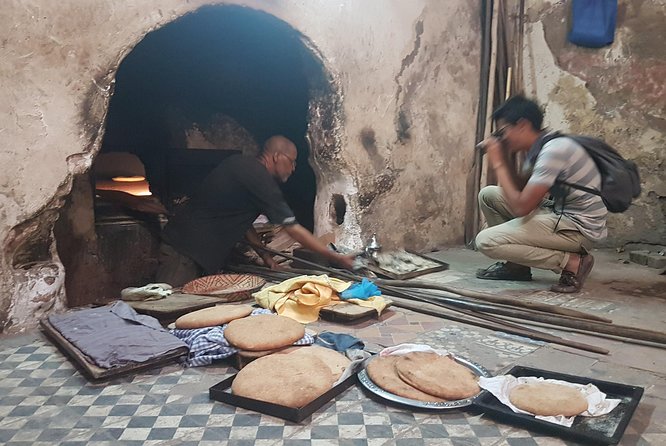
A big value point here is the total time on foot. If you have just a couple of days, this is often the fastest way to get your bearings. You’ll also spend time where everyday life still shows up, from ovens used for traditional cooking to workshops linked to trades you might otherwise only notice from the outside.
Where you meet, and how the morning starts
You meet at ArganaJ2H6+CPV, listed as Number 18, Znikat Rahba, Marrakech 40000, in the Jemaa el-Fnaa area. The tour starts at 10:00 am, and it ends back at the meeting point.
That “back where you started” ending matters more than it sounds. If you are planning lunch, a hammam, or a later stop at a museum, you can make the rest of your day without guessing how far you are from transit or backstreets.
You’ll also be in a small group of up to 6 travelers, which usually means less waiting at narrow corners. It is one of the reasons this kind of Medina tour works so well at street level.
Set these Marrakech options side by side
- Marrakech: Agafay Desert Sunset, Camel Ride, and Dinner Show
★ 4.6 · 35,119 reviews - From Marrakech: Ouzoud Waterfalls Guided Hike and Boat Trip
★ 4.7 · 33,630 reviews - Marrakech: Agafay Desert Quad & Camel Rides with Dinner Show
★ 4.8 · 27,382 reviews
Bab Ftouh to a local bakery: gates, ovens, and real Medina rhythms
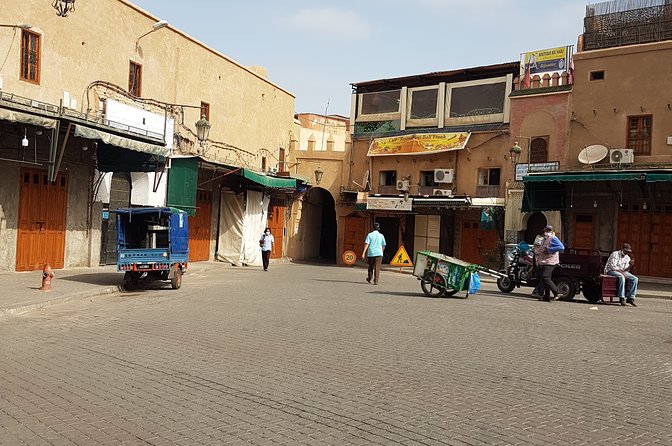
The tour begins at Bab Ftouh, described as one of the oldest gates inside Marrakech and also a key entrance connected to souks. Even if you already know Marrakech has gates and ramparts, this stop helps you understand the Medina as a living maze, not just a photo backdrop.
From there, you move to Mouassine, with a visit at a local bakery. This is a smart choice early in the tour because it gives you an immediate sense of what locals do day to day. You see a food stop that feels connected to the street, not staged for tourists.
At this point, your guide can also help you practice the basics of Medina walking: how to keep your group together, how to look without staring, and when to ask questions instead of trying to guess what you are looking at.
El Mouassine Mosque and the neighborhood layers you can still read
Next is El Mouassine Mosque, noted as one of the oldest mosques of Marrakech, dating back to the 16th century. The tour also places it in a section that used to be a residential quarter linked to Moroccan Jews, specifically identified as the Toshavim.
That pairing, building plus neighborhood context, is the kind of detail that turns a stone landmark into a place with a past you can actually follow. You’ll likely notice how the Medina’s spaces overlap, religious and residential, old and in-use.
For many visitors, this is also where the tour starts to feel less like sightseeing and more like orientation. You begin to see why certain streets matter and why the city’s layout keeps pulling people back through the same layers.
Foundouk Sarsar: the caravan inn stop that explains how trade shaped the city
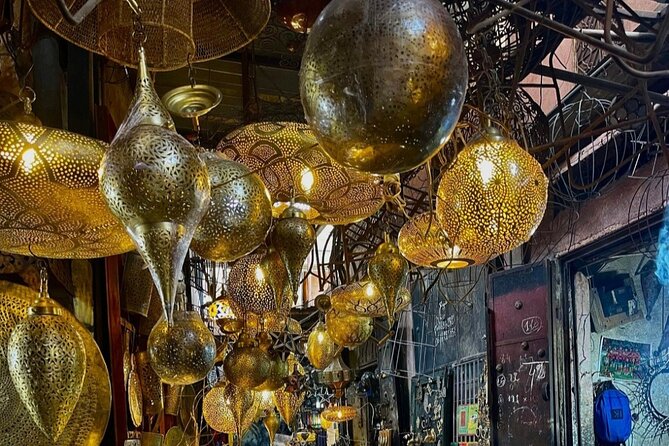
Then you head to Foundouk Sarsar, described as one of the oldest caravan inns of Marrakech. If you only think of the souks as shopping lanes, this stop helps you see the Medina as infrastructure for movement, storage, and trade.
Caravan inns are not just historic buildings. They were a practical answer to a big problem: how to host merchants and goods in a dense city. That is why a stop like this feels like a quiet reset in the middle of the loud market streets.
This is also a good moment to slow down. The tour’s structure gives short, focused visits, which helps you avoid the common problem of spending hours walking without actually absorbing anything.
If the Marrakech plan still has a gap:
- Marrakech: Agafay Desert Quad Biking Tour with Dinner-Show
★ 4.8 · 16,569 reviews - Marrakech: Atlas Mountains, Ourika Valley, Waterfall & Lunch
★ 4.8 · 15,834 reviews - From Marrakech: 3-Day Merzouga and Sahara Desert Tour
★ 4.9 · 15,308 reviews - Berber villages : Atlas Mountains Day Hike from Marrakech
★ 5.0 · 14,007 reviews
Tangia oven at Sidi Abdelaziz: food culture as a process, not a product
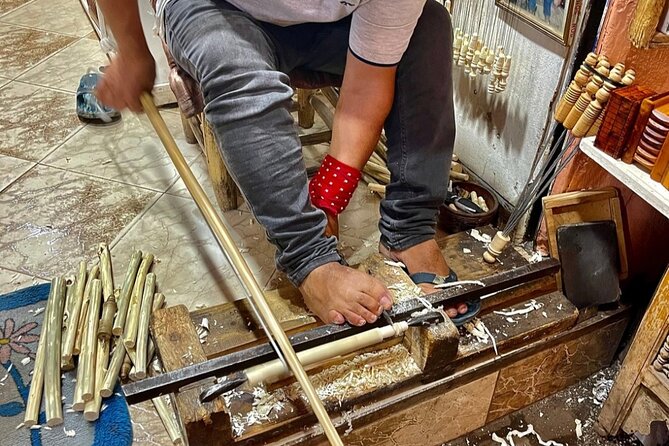
At Sidi Abdelaziz, the tour includes a visit to a cooking oven used by locals for Tangia. The key detail here is that it is designed for slow cooking, not a quick meal sold for instant consumption.
I like that this stop is about process. You get a better sense of how traditional food fits into daily life, and why the Medina’s cooking culture depends on long, patient methods. It also adds variety to your morning because you are not just seeing crafts and buildings. You are connecting culture to something people truly wait for.
If you are a foodie, this is one of the stops most likely to change how you read the city after the tour. Even if you do not eat Tangia right away, you will understand what makes it different.
Sidi Abdel Aziz Tabaa mausoleum: the saints stop with a sense of place
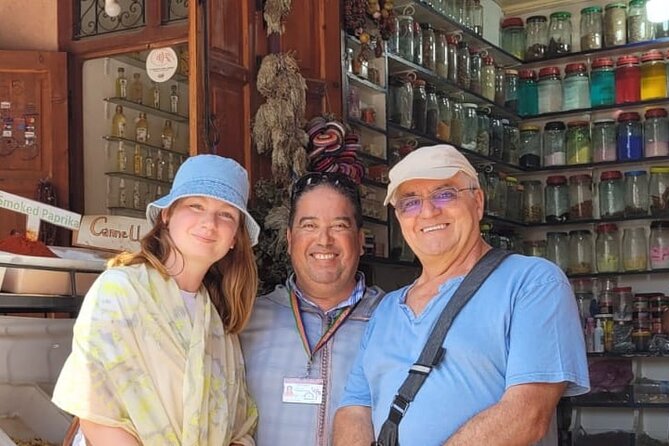
Next comes the Mausoleum of Sidi Abdel Aziz Tabaa, described as one of the seven saints of Marrakech. In the Medina, mausoleums often act like more than monuments. They can function as reference points people still navigate by, spiritually and socially.
This stop is valuable because it adds meaning to the route you are walking. It helps you connect why certain areas attract attention and why stories stick to specific corners.
You also get a sense of how Marrakech holds different forms of memory side by side. That is usually hard to notice if you only rush between major attractions.
Talaa souk, skin auctions, and learning when not to rush
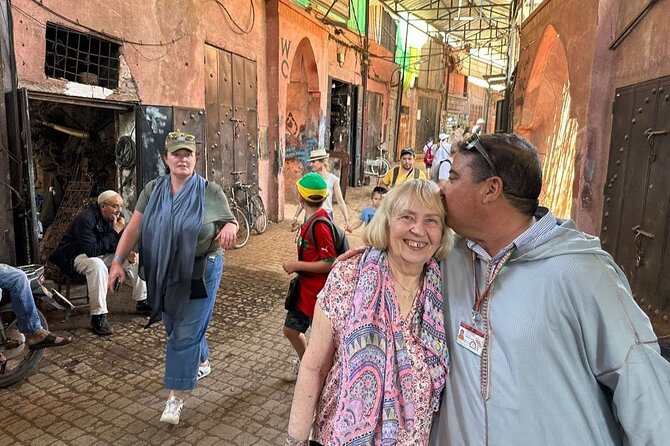
The tour continues to Talaa, described as a souk where an auction of skins takes place, with the note that it is apart from Friday. That “except Friday” detail matters because it hints at how local routines and religious rhythms shape market timing.
This is one of those moments where you benefit from having a guide instead of wandering alone. Without someone to frame what you are seeing, a visitor might just treat it like another storefront lane. With guidance, it becomes a look at how commerce works under local rules.
If you want to avoid stress later, this is also a great time to ask how the market changes by day. The tour gives you a practical foundation for timing your own shopping or food stops.
Souk Haddadine: blacksmith workshops and what craft looks like up close
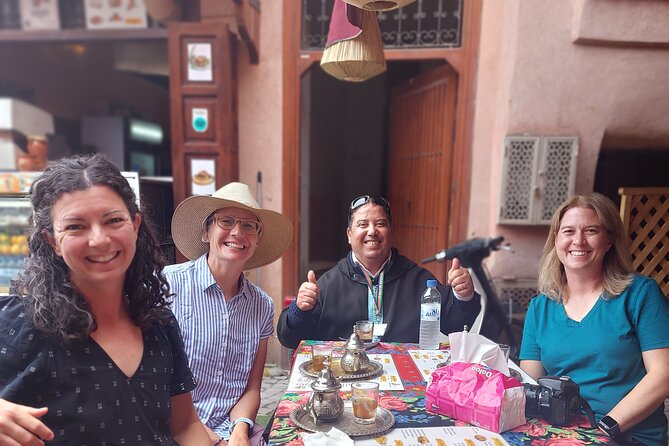
Then you move through Souk Haddadine, focused on blacksmith workshops. This stop is all about seeing trades at work rather than simply buying souvenirs.
One reason this tour gets strong recommendations is that it tends to keep you away from the most aggressive, tourist-focused shopping strip energy. Instead, you are directed toward places that make sense for skilled labor and ongoing production.
When you see tools, processes, and materials where they actually get used, bargaining and shopping also become easier to understand. You are not just negotiating for an object. You are responding to a craft that has value beyond the sticker price.
Rahba Kedima spices market: smelling the Medina and deciding how to shop
At Rahba Kedima Square, you reach a spices market described as la place des épices. The tour notes that visiting a local spices stall is optional.
That optional element is a nice touch. Spices can be intense, and they can also be an expensive souvenir category if you do not plan. Having the choice lets you decide if you want to slow down for aromas and small tastings, or keep momentum if your nose is already full of street scents.
If you do choose to stop, this is a good place to slow your pace. You will get the most from it when you treat it like a sensory walk, not a shopping sprint.
Souk Semmarine and the walk into the most famous chaos
Next is Souk Semmarine, described as one of the busiest and most famous parts of the souks. This is a classic Medina contrast stop, because you shift from quieter, craft-and-culture lanes into the higher-traffic market atmosphere.
I find this sequencing helpful. By the time you reach the busier streets, you already understand how the Medina “reads” in smaller sections. You know where you are in relation to key areas, and you can navigate with less confusion.
It also helps you time the day. Your guide-led pace typically keeps you moving at the right speed so you are not stuck in every crowd pocket for too long.
Jemaa el-Fnaa finale: a guided landing back into the square
The tour ends at Jemaa el-Fnaa, the big public square where you’ll see performances, including snake charmers, musicians, and storytellers. This finish makes the whole morning feel like a build-up, then a payoff.
You are not just dumped into the loudest area in town. You arrive with context for what you just saw, and with a better sense of how the Medina connects to the open square life.
If you want to keep enjoying the city right after the tour, this ending is practical. You are already where many evening plans begin.
The guides and how they change the experience
One of the biggest strengths shows up in the way the guides handle the market environment. People often highlight that guides slow down the walk and explain what you are looking at, including practical advice like when prices seem too high and how to bargain without turning it into a stressful negotiation.
Guides also shape your confidence. When you have someone who can explain the logic of the souks and the meaning of places like mausoleums, caravan inns, and ovens, the Medina stops feeling random. It starts feeling mapped, even when you never stop being in the middle of a maze.
You might meet guides such as Mohamed or Azim, and either way the goal stays the same: you leave with understanding and a head full of direction.
What to watch for: the one possible drawback
The main consideration is simple: this is a walking tour through narrow Medina streets. The tour lists moderate physical fitness as the expectation, so if long uneven stretches are not your thing, you may feel it after the final souk lanes.
Also, food and drinks are not included. The itinerary includes a bakery stop and an oven visit for Tangia, but that does not automatically mean a meal is part of the tour. Plan your next meal after you are done.
Finally, remember that masks are not included. If you use one, bring it.
Who this tour fits best (and who might skip it)
This tour is ideal for you if you want a guided way to learn how the Medina functions beyond the obvious monuments. It suits first-timers who feel overwhelmed by Marrakech streets, plus repeat visitors who want a different, more street-level route.
It also fits well if you enjoy hands-on culture like trades and everyday cooking processes, not only architecture.
You might want to skip it if you hate walking, dislike crowded areas like Souk Semmarine, or you only want major monument photo stops with minimal time on foot.
Should you book Hidden Sights of Marrakech?
Book it if you want the best “how to understand Marrakech” morning for your time. For $39, you get a small-group guided walk, bottled water, a route through gates, mosques, caravan inns, ovens, mausoleums, markets, and Jemaa el-Fnaa, and enough variety that it feels like more than one type of sightseeing.
Skip it only if you know you will struggle with a steady walk through the Medina’s uneven streets, or if you are hoping the tour includes a full meal and you do not want to think about food plans.
If you are here for a short trip, this tour is a smart first-step choice. It helps you see the city’s daily bones, so everything else you do after feels easier.
FAQ
How long is the Hidden Sights of Marrakech tour?
The tour lasts about 3 to 4 hours.
What time does the tour start, and where do we meet?
It starts at 10:00 am. You meet at ArganaJ2H6+CPV, Number 18, Znikat Rahba, Marrakech 40000, Morocco, in the Jemaa el-Fnaa area.
Is there hotel pickup or drop-off?
No. Hotel pickup and drop-off are not included, and the tour ends back at the meeting point.
What’s included in the price?
The price includes bottled water, a local guide, and a professional guide.
Is food or lunch included?
No. Food and drinks, including lunch, are not included.
Are entrance tickets included for the stops?
The itinerary lists free admission tickets for each stop.
How large is the group?
The tour/activity has a maximum of 6 travelers.
Are there requirements for children?
Children must be accompanied by an adult.
What is the cancellation policy?
Free cancellation is available. You can cancel up to 24 hours in advance for a full refund. If you cancel less than 24 hours before the experience’s start time, the amount you paid will not be refunded.
Just reviewed around Marrakech
- From Marrakech: Day trip to Ouzoud waterfalls and boat tour★ 5.0 · 73 reviews
- Private horseback ride in the Palmeraie of Marrakech★ 5.0 · 73 reviews
- Marrakech to Essaouira / Small group day tour To Essaouira★ 5.0 · 73 reviews
- 1 Day Guided Tour of World Heritage Kasbah Ait Ben Haddou from Marrakech★ 3.5 · 73 reviews
- Marrakech: Authentic Local Dinner with Transport★ 4.1 · 73 reviews
- Ourika Valley Day trip: Hike, waterfall, lunch and Relax★ 4.8 · 73 reviews
- Waterfalls, Three valleys, Atlas Montains, Camels & Desert★ 5.0 · 73 reviews
- Marrakech: Cycling Tour in Palm Groove with Local Breakfast★ 4.7 · 73 reviews
Marrakech Tours, compared.

Agafay Desert Sunset, Camel Ride, and Dinner Show
Read our review →
Agafay Desert Quad & Camel Rides with Dinner Show
Read our review →
Agafay Desert Quad Biking Tour with Dinner-Show
Read our review →
Atlas Mountains, Ourika Valley, Waterfall & Lunch
Read our review →

Berber villages : Atlas Mountains Day Hike from Marrakech
Read our review →