Reviewed · TOURS
Marrakech: Cultural Bicycle Tour with Pastry and Tea
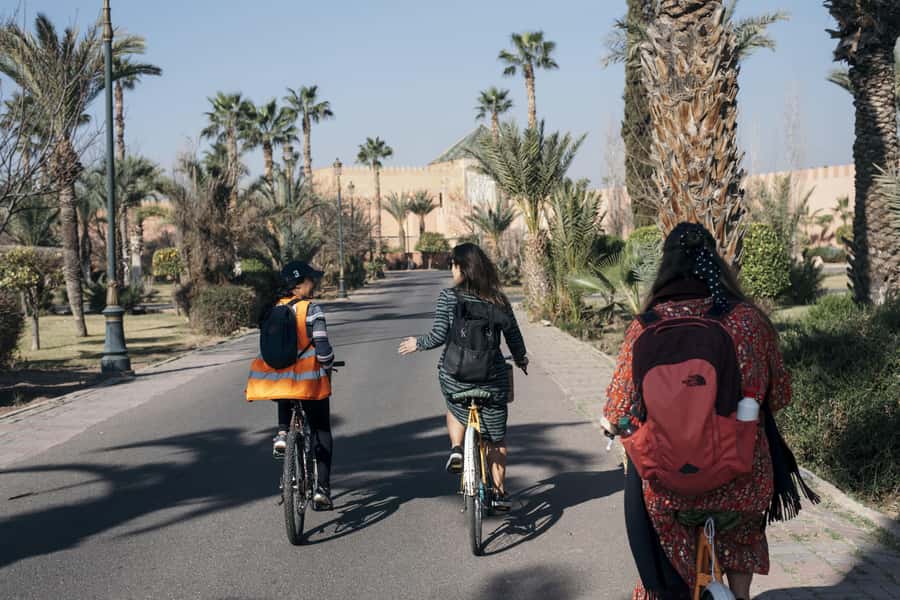
Marrakech by bicycle is interesting because the city changes as you move, not just as you look. You start in religious and everyday neighborhoods, then you work your way from the medina’s tight lanes to wider boulevards, all while stopping for real local culture like Moroccan bread and zellige tiles.
I like that the tour mixes hand skills and daily life, not only monuments. You’ll also get a firsthand look at the hammam tradition and how locals balance tradition with modern Marrakesh. One drawback to plan for: the first stretch can feel intense, since Marrakech traffic is its own system and you need to be road-aware and comfortable cycling close to mopeds, pedestrians, and donkey carts.
Key points to know before you ride
- Clay-oven Moroccan bread stop: Watch bread baked and learn why it is part of daily life, not just a snack.
- Zellige tile craft, made up close: See how Morocco’s mosaic tradition is produced, step by step.
- Royal Palace gardens, public-side views: Admire Dar El-Makhzen surroundings without needing special access.
- Hammam culture, explained as social life: You’ll learn the rituals and the role the public bathhouse plays.
- Old medina to Gueliz and Hivernage: Compare the narrow lanes with wide boulevards and modern streets.
- Tea, juices, and pastries at the end: Refreshments plus free entrance to local stops help the value.
Why cycling Marrakech feels different from sightseeing
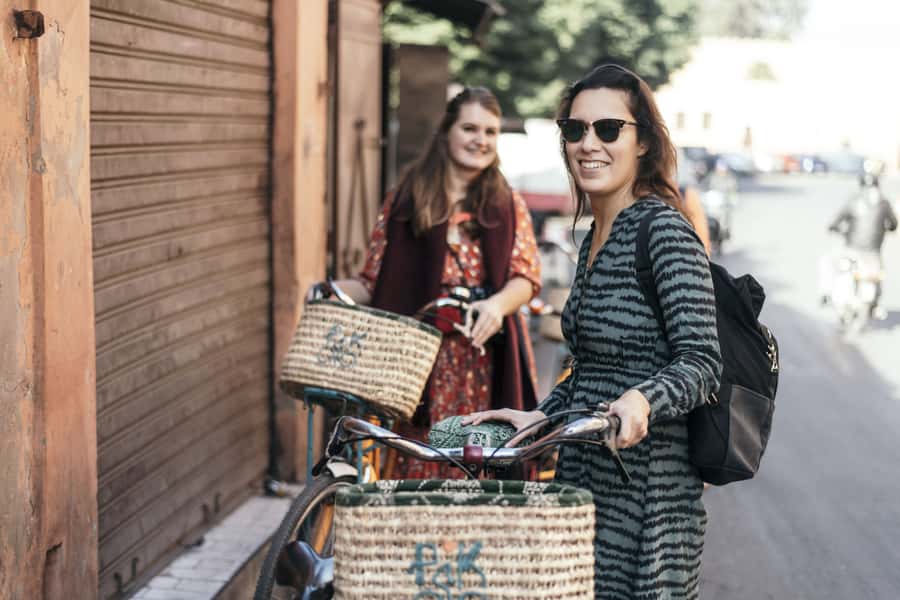
This isn’t the kind of tour where you pop in for photos and sprint back out. With the bike, you glide through the rhythms of Marrakesh. Narrow alleys feel like you are moving with the city, and wide boulevards feel like you finally understand the bigger map.
What makes this experience click is the way it links culture to everyday routines. Bread is not treated like a foodie detour. Hammam is not framed as a museum exhibit. Zellige tiles are not shown as a finished artwork only. You see the process, hear the meaning, and then taste or watch something happen in front of you.
Set these Marrakech options side by side
- Marrakech: Agafay Desert Sunset, Camel Ride, and Dinner Show
★ 4.6 · 35,119 reviews - From Marrakech: Ouzoud Waterfalls Guided Hike and Boat Trip
★ 4.7 · 33,630 reviews - Marrakech: Agafay Desert Quad & Camel Rides with Dinner Show
★ 4.8 · 27,382 reviews
Pikala Bikes, the ride style, and the first-hour reality check
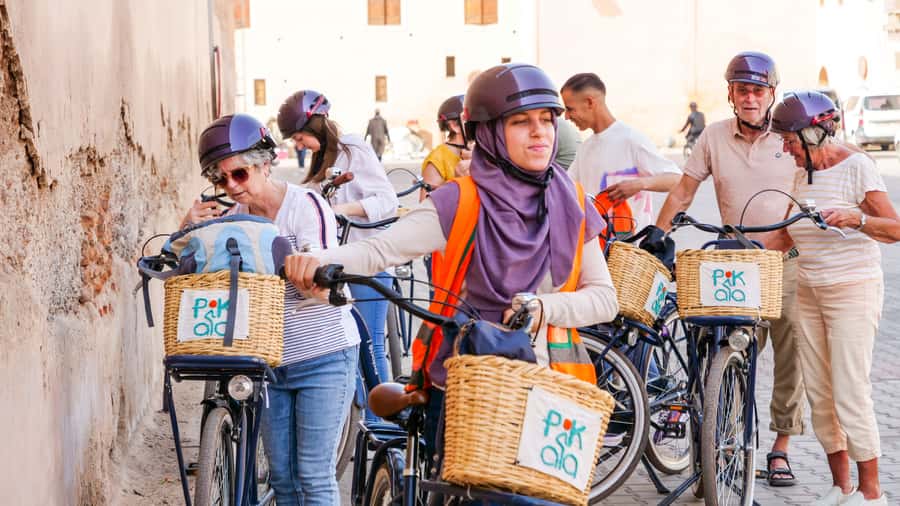
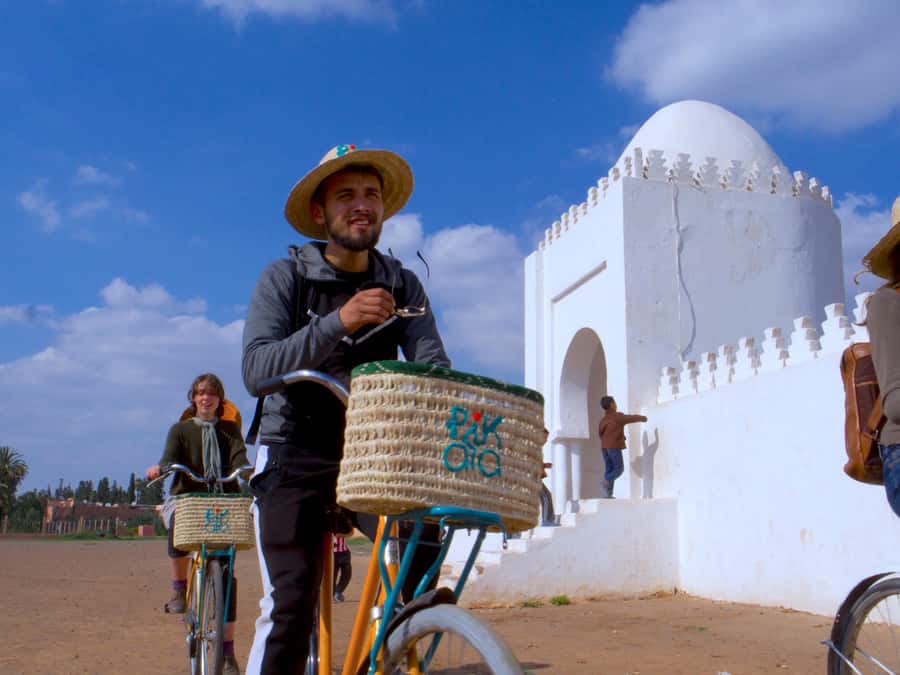
You meet at Pikala Bikes, then you roll out with a live guide in English or French. The bikes are sturdy, Dutch-style bicycles, and they ride at a comfortable pace with regular stops. That matters in Marrakech, where momentum helps you stay calm while the world moves around you.
Here is the honest part. The medina streets are narrow and traffic can be chaotic. Even when drivers are careful, you are still sharing space with mopeds, pedestrians, and sometimes donkey carts. Several guides are specifically praised for keeping the group together and helping you cross safely, including people like Hamid, Ayoub, Rabab, Yassir, and Khalil.
So do this tour if you are comfortable riding in traffic. If you get stressed by close calls, choose a different activity.
Zawiya of Sidi Bel Abbas: a quick intro to spiritual Marrakesh
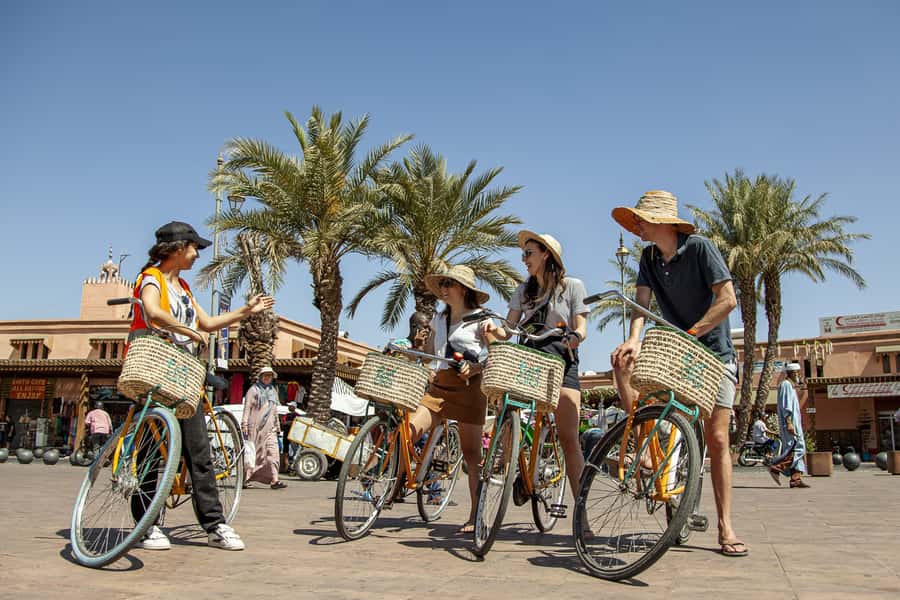
Your ride begins with a stop at the Zawiya of Sidi Bel Abbas for photos and sightseeing. Think of this as your opening scene, a moment to understand that Marrakech is not only about markets and hotels. It also has corners of devotion and quieter social life, right next to the busiest routes.
The stop is short, about 15 minutes, and the format is simple: look around, snap a few photos, then get back on the bike. This works well because you’re not overwhelmed yet, and you still have energy for the busier streets ahead.
The Moroccan bakery stop, bread baked in clay ovens
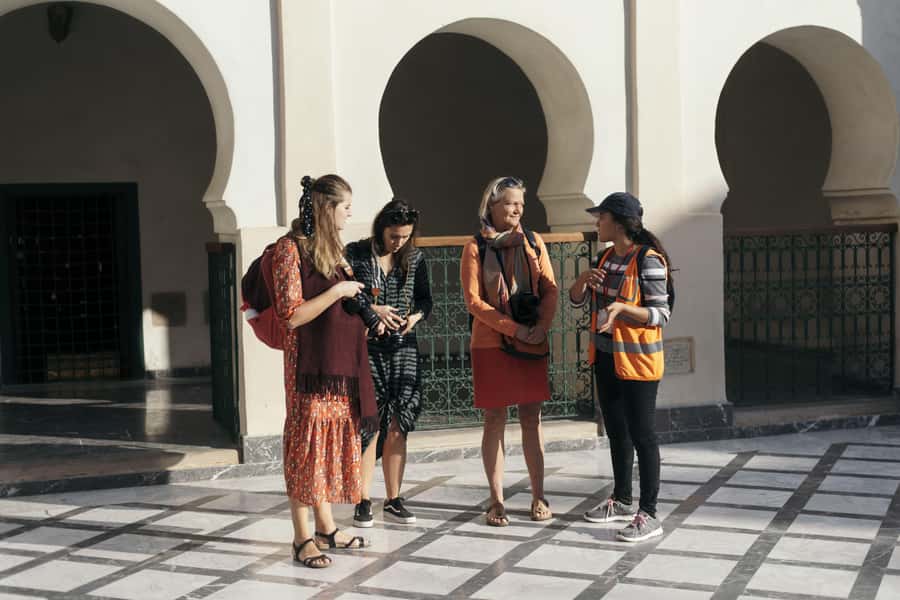
This is one of the main reasons people love the tour. You step into a local bakery, watch bread baked in a clay oven, then taste fresh Moroccan bread. It is both practical and cultural.
Bread in Morocco is daily life. It shows up in meals, in hospitality, and in the rhythm of a household. You’re not only eating something warm and delicious, you’re learning why it matters. The tour also builds this into the flow, so you are smelling and tasting as you learn, not just listening in a classroom.
Expect a focused stop, around 10 minutes, and remember this is a working environment. Wear casual clothes you can move in and keep your phone ready for quick photos, but stay respectful of the bakers.
If the Marrakech plan still has a gap:
- Marrakech: Agafay Desert Quad Biking Tour with Dinner-Show
★ 4.8 · 16,569 reviews - Marrakech: Atlas Mountains, Ourika Valley, Waterfall & Lunch
★ 4.8 · 15,834 reviews - From Marrakech: 3-Day Merzouga and Sahara Desert Tour
★ 4.9 · 15,308 reviews - Berber villages : Atlas Mountains Day Hike from Marrakech
★ 5.0 · 14,007 reviews
A sequence of neighborhood “pass by” moments that actually teach you
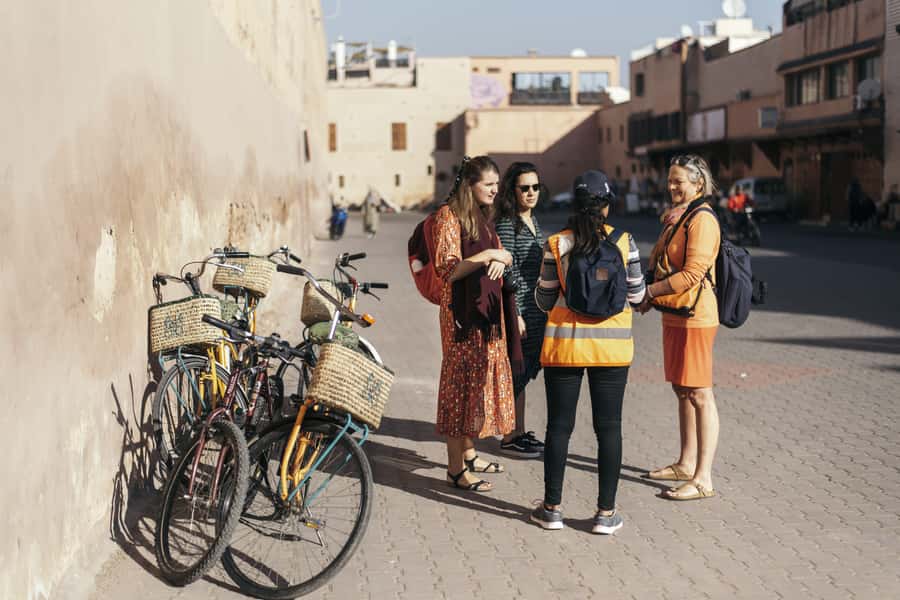
Between bigger stops, you’ll experience several shorter segments labeled as hidden gems or passes by. These are not filler time. They are how the guide shows you what life looks like when you are not aiming straight at a headline monument.
One of the early segments includes a quick photo and sightseeing moment (around 10 minutes). Another is a longer pass (another around 10 minutes) where you can look at street details as you move. The point is to train your eye. After a couple of these, you start noticing the patterns locals use to navigate space, work, and community.
Place des Ferblantiers break: where rest turns into people-watching
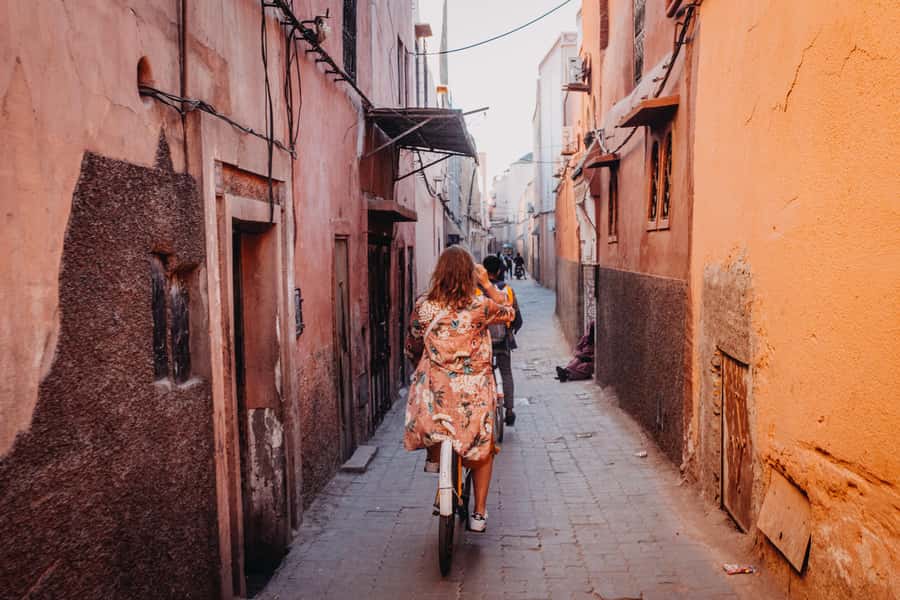
At Place des Ferblantiers, you get a break with photo stops and free time, about 20 minutes. This pause matters because it gives you a mental reset while the tour shifts gears.
Also, this is Marrakech, so your break is not only about sitting. It’s about watching how people use the street, how goods move through the area, and how conversations happen in the space between daily errands. If you like street photography, this is one of your chances to get a few good frames without rushing.
Zellige tile history and the workshop you can see with your hands
One of the tour highlights is the zellige tile workshop and the history behind Moroccan tilework. You meet artisans and see how zellige is made, not just how it looks in a palace.
Zellige is famous for a reason: it is geometry you can walk through. Watching the process helps you understand why it decorates palaces and mosques for centuries. You’re seeing craft discipline, repetition, and color choices that feel precise, even when they are handmade.
If you have even a small interest in design, architecture, or traditional craftsmanship, this is the portion that sticks. It gives you a story you can carry back when you see tiles later across Morocco.
مشور البراني break: a breather and another angle on local life
You’ll also pause at مشور البراني, with a break and photo opportunities for about 15 minutes. This stop keeps the pace human. You’re out on the road enough that these short rests become part of the experience rather than a disruption.
Use this time to drink water, check how you’re feeling on the bike seat, and refocus. Marrakech streets demand attention, and you do yourself a favor by taking a moment to breathe before moving on.
Koutoubia Mosque and the city’s major landmarks from the bike
You ride past Koutoubia Mosque for sightseeing, about 10 minutes. This is a classic Marrakech name, but by the time you reach it, it feels different because you have been moving through everyday streets all morning.
Approaching landmark areas by bicycle also changes how you perceive them. Instead of treating the mosque as a static stop, you see how people and traffic funnel around it, and how the city’s identity overlaps with daily movement.
A quick photo stop at the Church of the Holy Martyrs
You’ll make a photo stop at the Church of the Holy Martyrs, around 10 minutes. This is a useful reminder that Marrakech is layered. It’s a Muslim-majority city, but it also has Christian communities with visible places of worship.
The bicycle format keeps it light. You’re not getting a long lecture, you’re getting a quick snapshot with context from your guide, then you keep riding.
Hammam culture: rituals and the social role of public baths
The tour includes a traditional hammam experience, with a visit to a Moroccan public bathhouse where you learn rituals and the hammam’s social role. This is one of those cultural elements that many visitors only hear about secondhand.
Here, the value is the explanation. You are learning how the hammam fits into social routines, how people relate in that space, and why it is more than hygiene. It’s also a great contrast to the tilework and bread you saw earlier, because hammam culture is about bodies, time, and community.
You should go with curiosity and respect. Hammams are local spaces with their own rules, and the tour is best when you stay open and follow your guide’s cues.
Royal Palace gardens (Dar El-Makhzen), seen from public space
You admire the Royal Palace gardens around Dar El-Makhzen from the public side. This is another point where bicycles help. You get perspective without needing special access.
You’ll learn about why the monarchy and its surroundings matter historically, then take in the architecture from outside. It’s a smart way to experience the aura of power without turning the palace into a distant, fenced-off photo opportunity.
Modern Marrakech ride: Gueliz and Hivernage by bike
After the medina maze, the tour shifts toward modern Marrakech in areas like Gueliz and Hivernage. The contrast is real. Wide boulevards replace tight alleys, and you see trendy cafes and luxury hotels alongside normal daily streets.
This part helps you understand Marrakech as a whole city, not only as a picture postcard. You’ll feel the difference in space and traffic flow, and it becomes easier to ride with a calmer rhythm.
If the medina part stretched your focus, this modern segment can feel like relief, because you can breathe and look longer at storefronts, street design, and everyday life.
Pikala Cafe tea, juices, and Moroccan pastries at the finish
At the end, you return to Pikala Bikes and then enjoy the café stop. This includes coffee or tea plus local snacks, about 20 minutes, along with juices and Moroccan pastries during the cultural cafe break.
It’s a nice wrap because you can reconnect the dots. The bread stop made you think about food as daily ritual. The hammam stop made you think about routine and community. Now you sit down and taste again, with a chance to ask your guide follow-up questions.
Many people also appreciate that water, fruits, juices, and sunscreen are included, so you are less likely to scramble for supplies during the ride.
Price and value: why $34 for 3 hours can make sense
At $34 per person for about 3 hours, this tour is strong value if you want more than a standard “see the sights” walk. You get a live guide, water and fruits, juices and Moroccan pastries, plus sunscreen. You also get free entrance to the local stops, which helps keep the day from turning into surprise ticket costs.
You also pay for something harder to estimate: safe group management in traffic. Multiple guides are praised for watching the group, turning around to make sure everyone stays together, and leading careful crossings. That added effort is part of why the tour works for a wide range of visitors, including people who were nervous at first.
Who should book this bike tour
This Marrakech cultural bicycle tour is best for you if:
- you can ride a bike at street level and handle close traffic
- you want cultural stops tied to daily life, bread, craft, and hammam routines
- you like comparing old medina streets with modern neighborhoods
- you prefer small-group energy and guide-led context over long museum marathons
It may not be the best fit if:
- you hate busy streets or you freeze when vehicles crowd your space
- you plan to wear long flowing skirts or dresses that could get in the way
- you want a slow, car-free stroll style of sightseeing
Tip on clothing: casual clothes are encouraged, but avoid very long dresses or skirts so the ride stays comfortable.
Should you book Pikala Bikes Marrakech?
If you want an action-based way to learn Marrakech, this is a smart booking. The tour’s strongest points are practical culture: bread baked in clay ovens, zellige craftsmanship you can see up close, and hammam tradition explained as social life. Add the tea and pastries at the end and you get a complete, satisfying morning.
If you are genuinely uneasy about traffic, take that seriously. This ride is not about speed or stunts, but it does take attention. With the right mindset and a willingness to ride near moving traffic, you’ll come away with a clearer picture of Marrakech than you can get from photos alone.
FAQ
How long is the Marrakech Cultural Bicycle Tour?
The tour lasts 3 hours.
How much does it cost?
It costs $34 per person.
Where do I meet for the tour?
You meet at Pikala Bikes headquarters.
Is hotel pickup included?
No, hotel pickup and drop-off are not included.
What languages are the live guides available in?
The live tour guide is available in English and French.
What is included in the tour price?
The tour includes water and fruits, juices and Moroccan pastries at a cultural cafe, sunscreen, and free entrance to the local stops.
What should I wear?
Wear casual, comfortable clothes. Be careful with long dresses or skirts.
Can I cancel for a refund, and can I pay later?
Yes. You can cancel up to 24 hours in advance for a full refund, and you can reserve now and pay later.
Just reviewed around Marrakech
- From Marrakech: Day trip to Ouzoud waterfalls and boat tour★ 5.0 · 73 reviews
- Private horseback ride in the Palmeraie of Marrakech★ 5.0 · 73 reviews
- Marrakech to Essaouira / Small group day tour To Essaouira★ 5.0 · 73 reviews
- 1 Day Guided Tour of World Heritage Kasbah Ait Ben Haddou from Marrakech★ 3.5 · 73 reviews
- Marrakech: Authentic Local Dinner with Transport★ 4.1 · 73 reviews
- Ourika Valley Day trip: Hike, waterfall, lunch and Relax★ 4.8 · 73 reviews
- Waterfalls, Three valleys, Atlas Montains, Camels & Desert★ 5.0 · 73 reviews
- Marrakech: Cycling Tour in Palm Groove with Local Breakfast★ 4.7 · 73 reviews
Tours, compared.

Agafay Desert Quad Biking Tour with Dinner-Show
Read our review →

Quad Bike Tour to Palm Oasis and Jbilat Desert
Read our review →
3 Days Desert Tour From Marrakech To Merzouga Dunes & Camel Trek
Read our review →
3-Day Marrakech to Merzouga Desert Tour: Camel Rides & Overnights
Read our review →
Desert & Mountain Tour with Camel Ride & Lunch
Read our review →