
Reviewed · STREET FOOD TOURS
Marrakech street food tour with a local
What makes this Marrakech street food tour so interesting is that it trades the usual tagine-and-couscous routine for meal stops where locals actually eat. I love the variety of dishes and the chance to ask questions face-to-face as you walk. One drawback: you are moving through the Medina and it can feel busy, so plan to pace yourself or you’ll get food-swept fast.
You’ll meet at Café de France in Jemaa el-Fna, then step into the narrow alleys where street food is part snack, part meal, part social scene. You should come hungry, but also smart about it, because the tour stacks multiple sweet and savory stops in about three hours.
If you have allergies or dietary restrictions, tell your guide in advance. They say they will do their best to accommodate you with alternative dishes, but street food is built on shared kitchens, shared ingredients, and lots of small decisions.
Key highlights you’ll feel on the walk
- No tagine, no couscous: you’ll focus on 8 to 9 local dishes beyond the tourist staples
- Up to nine food stops in about 3 hours: steady walking, lots of samples, not one big sit-down meal
- Drinks are included: from seasonal fruit smoothies to a hot eucalyptus herbal infusion
- You go beyond the square: Jemaa el-Fna is part of it, but the real action is in the Medina alleys
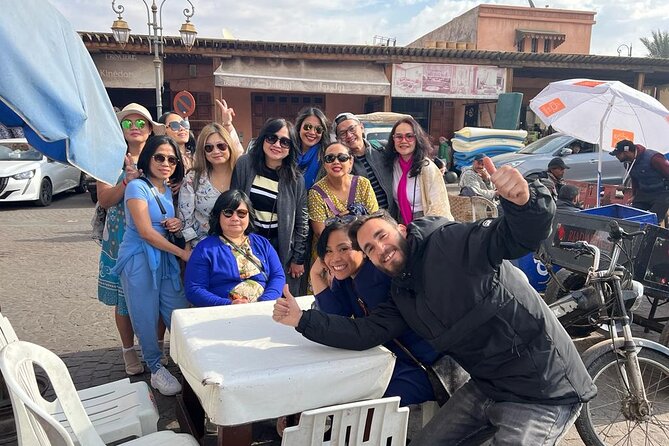
- Small group size: maximum 15 people, so you can actually talk to your guide
- You’ll see Berber food culture up close: explanations that make the flavors and ingredients click
Meet at Café de France, then get your bearings in Jemaa el-Fna
The start point is easy to find once you’ve located Jemaa el-Fna: you meet at Café de France in the main square. It matters because Jemaa el-Fna can feel like organized chaos when you first arrive. You get a guide-led handhold right away, so you’re not just lost and hungry.
From this launch spot, you’ll move on foot into the Medina. That shift is one of the best parts of the tour, because you quickly go from the open-square scene into the side streets where locals actually eat. The route is built for tasting, not sightseeing for sightseeing’s sake, so expect frequent stops and short walking segments.
You’ll also learn how guides read the square and the streets. On this kind of tour, that skill is gold. In one set of experiences I heard about, guides like Ismail were especially good at navigating the overwhelming parts of the square with calm, clear directions. Another guide, Mohamed, was described as genuinely caring about your experience, including offering cultural context while you eat.
More Food Tours in Marrakech
- From Marrakech: Merzouga 3-Day Desert Safari with Food
★ 4.7 · 12,232 reviews - Marrakech: Street Food Tour with a Local Guide
★ 4.9 · 3,119 reviews - Marrakech: Street Food Tour by Night
★ 4.8 · 2,838 reviews
A Medina walk built around meal stops, not a food lecture
This is a casual street food tour, and that’s a big part of the value. Instead of standing around while someone talks at you, you’re tasting your way through the neighborhood. The group size cap of 15 people helps keep the pace human. You can ask questions. You can point at ingredients. You can ask how something is made, not just what it is.
The tour stays focused on where locals gather to eat. That means you’re not limited to the most photogenic corners or the most obvious tourist counters. It also means you get less control than you would in a restaurant, which is part of the charm. Street food moves with the day, the cook, and whatever is freshest.
Timing is tight but doable. The tour runs about 3 hours, and it includes food and drinks at each stop. You should plan on snacking often, then suddenly realizing you’ve had nine things in a short time. That’s why the best advice is simple: pace yourself, and don’t assume you can finish everything just because it looks small.
The tasting lineup: what you will eat beyond tagine and couscous
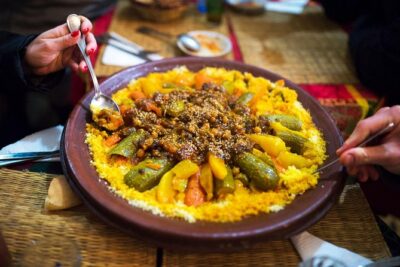
The big promise here is straightforward: NO TAGINE, NO COUSCOUS, just local dishes you might not order on your own. The menu includes both savory and sweet, plus drinks designed to reset your palate between stops.
Here are the dishes the tour highlights and includes, so you know what’s coming. I’ll also add what to expect in the way each one typically feels in your mouth and on your stomach.
Moroccan pancakes and soup-sweets combo
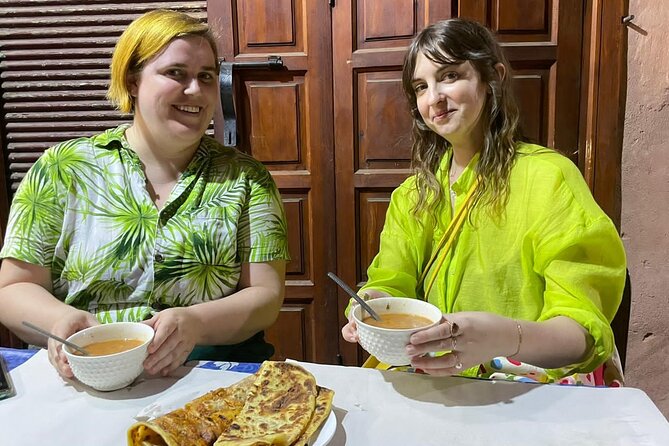
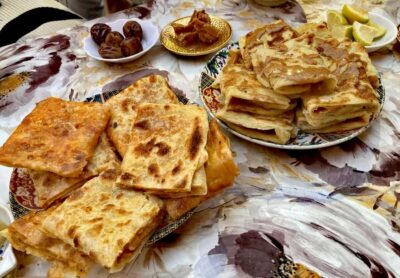
- Msemen Amer: Think Moroccan pancake that is often stuffed. Expect something layered, pan-cooked, and satisfying in a way that feels more like a meal than a snack. If you’re hungry when you start, this is a great early anchor.
- Harira & Chebakia: Harira is a Moroccan soup that people associate with comfort and shared tables. Chebakia is sweet, often sesame-and-honey style. Together, you get the classic salty-then-sweet rhythm that keeps street food tasting from feeling flat.
One practical note: soup is your friend here. It gives you moisture and warmth, which helps when the next stops include grilled meats and pastries.
More Street Food Tours in Marrakech
- The Original Marrakech Street Food Tour
★ 5.0 · 248 reviews - Marrakech Street Food Tour
★ 5.0 · 220 reviews - Marrakech Night Street Food Tour / Taste The Real Marrakech
★ 4.9 · 200 reviews - Marrakesh: Guided Street Food Tasting by Locals
★ 4.6 · 47 reviews
Eggs and tomato flavors in a Marrakech style twist
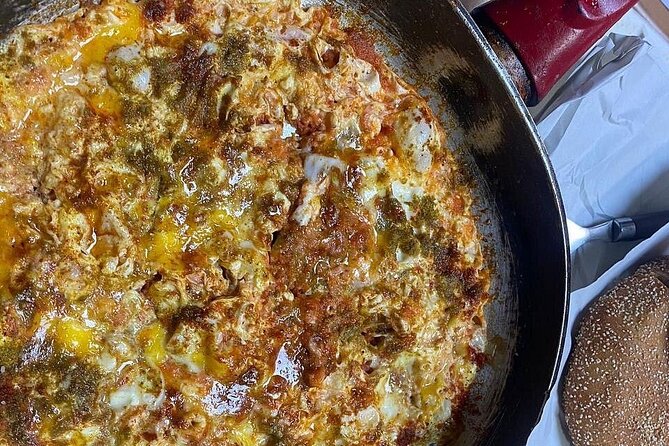
- Makkla bel Kefta: This is described as the Marrakech twist on chakchouka. You can expect the familiar comforting combo of tomatoes and savory ingredients, usually built in a way that feels saucy and spoonable, even when you eat it as street food.
This is the kind of dish that makes you understand why Marrakech street food deserves more attention than the tourist-carried keywords. It’s flavorful, but not complicated to enjoy once you know what you’re tasting.
Light fried sweets and fruit refreshers
- Sfenj: Light and airy Moroccan donuts. These tend to be best while warm, and they’re the kind of snack that tricks you into wanting one more even when you’re already full.
- Lhnidiya: Cactus fruit. This is one of those stops that feels like a palate reset. If you don’t usually eat cactus fruit at home, it’s a fun taste of local produce.
- Moroccan frozen yogurt: The tour includes a frozen yogurt stop as part of the sweet segment. If you’re someone who gets overwhelmed by too many pastries, this can be the cooling break that saves the second half of the tour.
Grilled meats, plus a more adventurous stop
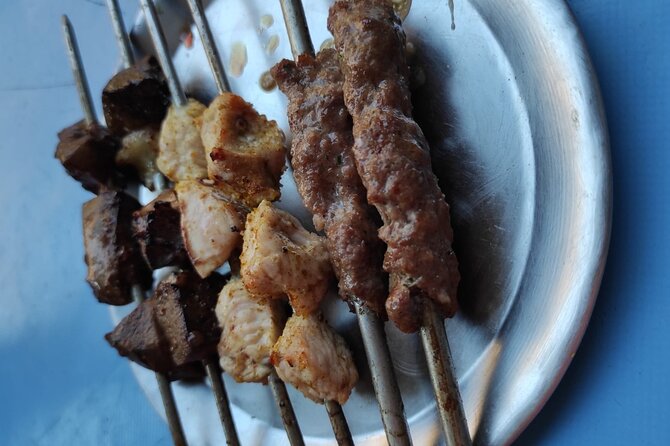
- Chwa: Savory grilled meats including beef, turkey, and liver. This is where the tour shifts from snack energy to proper grilled comfort. If you eat meat, this is usually a crowd-pleaser for a reason.
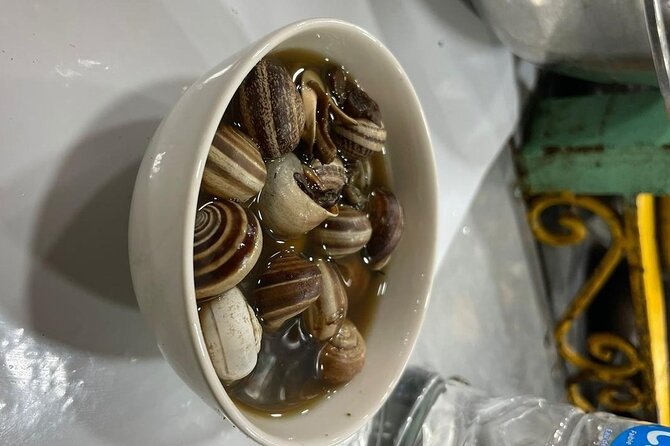
- Rass Mbekher: Steamed sheep’s head seasoned with cumin. This one is the most “you are in Morocco” moment on the list. It’s not a safe choice for everyone, and it depends on your comfort level. If you want to keep the experience enjoyable, bring your preferences to the guide early, not after your first bite.
The way I’d think about it: this tour includes foods you might not choose alone. If you’re curious, try it with an open mind. If you’re cautious, ask how it’s served and decide on the spot.
Drinks that actually make sense between bites
- Panaché: A refreshing smoothie made from seasonal fruits. This is a palate cleanser that also gives you hydration, which matters when you’ve been walking and eating.
- Khoudenjal: A hot herbal infusion with eucalyptus, described as helping clear your senses and aiding digestion. This is one of those “surprisingly useful” drinks after heavy or oily foods. It’s not just for taste, it’s for feel.
What each part of the tour is really doing for you
It’s easy to treat a food tour like a checklist: eat, move on, get a photo. This one works better when you think of it as three layers.
First, it gives you food competence. After multiple tastings, you start understanding textures, flavor patterns, and what Morocco does well in street-level cooking. That makes it easier to order on your own later, even if you return to the same neighborhood.
Second, it gives you social competence. The tour is built around people behind recipes, and that changes how you see the Medina. You’re not just eating at random stalls. You’re getting quick explanations in plain language, often with a warm tone.
Third, it gives you confidence in Jemaa el-Fna. The square can overwhelm you if you show up alone. You get the chance to explore it while a guide has the pace and direction under control.
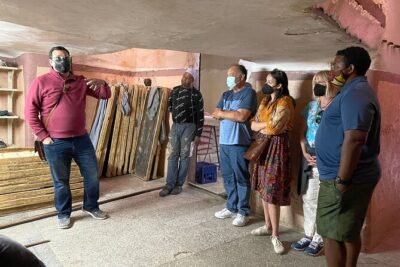
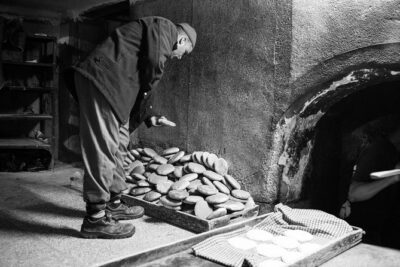
One cultural detail that adds real depth is the kind of cooking knowledge you pick up beyond the dishes themselves. In one described experience, Mohamed shared how tangine-style cooking can involve pots set in ash in a large public cellar that is also heated as part of a hammam setting. Even though the tour itself sticks to non-tagine tastings, those kinds of explanations help you connect the street food you’re eating with broader cooking traditions.
Price and value: why $40.71 often feels like a feast
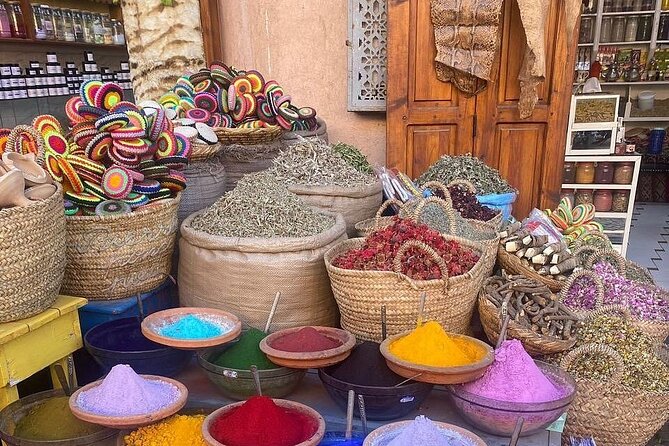
At $40.71 per person for about three hours, this tour is priced like a “one afternoon meal plan,” not like a buffet ticket. The value comes from three things you don’t have to figure out yourself:
- You get 8 to 9 dishes rather than one or two major stops.
- All food and drinks are included, so you’re not constantly checking what costs extra.
- A small group means the experience stays interactive, which matters when you’re asking questions about ingredients and preparation.
Also, the tour is booked fairly in advance, with an average of 19 days ahead. That’s a hint that it’s not a last-minute thing in practice.
Is it always a good deal for everyone? If you are a picky eater, or you want only mild flavors, you might feel the pressure of trying many items. The best-fit approach is to be open, but honest with your guide about what you want to skip or try in smaller bites.
Tips to make you enjoy every stop (without feeling stuffed)
Here’s how to get the most out of a “come hungry” tour without turning it into a food coma.
- Start slow at the first savory stop. Don’t race to “catch up” if your group moves fast.
- Alternate textures. When you eat something fried or grilled, follow it with a sip of your included drink when possible.
- Ask about spice level early. If you’re sensitive, tell your guide at the start, not mid-tour.
- Be realistic about the adventurous dish. For Rass Mbekher, decide based on your comfort with the ingredient and portion size. You don’t have to force it.
- Save room for dessert. The sfenj and the sweet stop are part of the point, especially with the frozen yogurt mentioned.
- Wear comfortable shoes. The tour is built around walking, and Medina streets are not made for flimsy sandals and long strolls.
If you have allergies or dietary restrictions, say so when you book. The tour info says the guide will do their best to accommodate you with alternative dishes.
Who this tour suits best, and who should consider another option
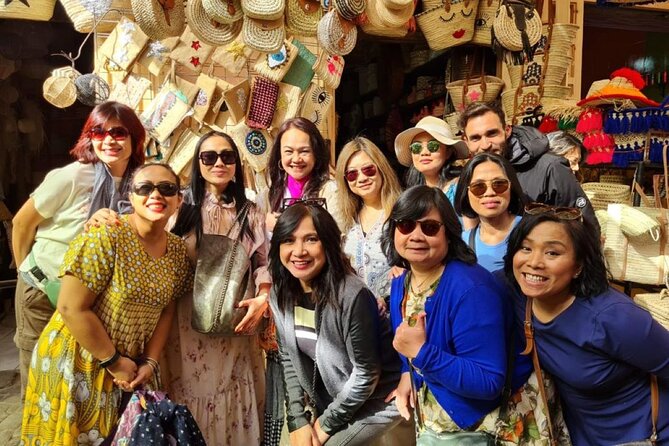
This is a great match if you want:
- Street food variety beyond tagine and couscous
- A guided route through the Medina alleys
- A small group where you can ask questions and get explanations
It may be less ideal if you:
- Hate walking or standing in crowded lanes
- Have strict dietary needs where replacements might be hard in shared street-food settings
- Feel uncomfortable with more adventurous items like sheep’s head
If you love learning while you eat, you’ll probably have a strong time. If you’re only interested in one type of food, the range might feel like too much.
Should you book this Marrakech street food tour?
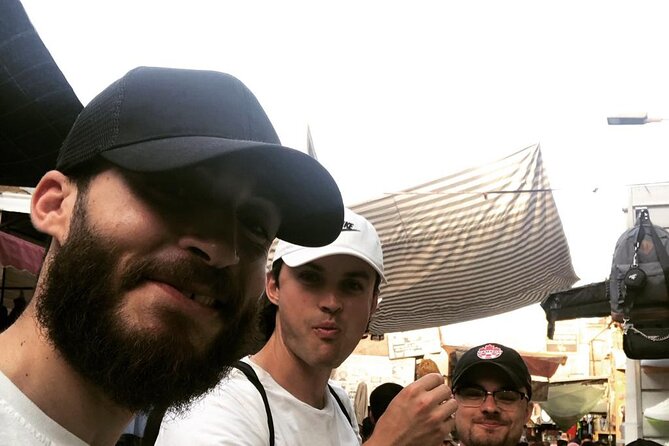
I’d book it if you want a smart way to eat like a local in Marrakech without spending hours chasing stalls yourself. The key is the focus on non-tourist staples, plus the practical guide help that turns Jemaa el-Fna from chaos into context.
I would hesitate only if you’re worried about being forced into foods you’d never order, or if mobility is a problem for you. For most people, the small group size, included drinks, and tight three-hour structure make it a very efficient way to experience Marrakech food culture.
FAQ
Where do I meet for the Marrakech street food tour?
You meet at Café de France in the main square, at the listed start location: ArganaJ2H6+CPV, Number 18, Znikat Rahba, Marrakech 40000, Morocco.
How long is the tour?
The tour lasts about 3 hours.
Does the tour include tagine or couscous?
No. The experience is specifically described as NO TAGINE, NO COUSCOUS.
How many dishes will I try?
The tour says you’ll try 8 to 9 authentic local dishes, with up to nine food stops.
Are drinks included?
Yes. All food and drinks are included in the price.
What kinds of food are included?
The tour includes items such as Moroccan pancakes (Msemen Amer), Harira and Chebakia, Makkla bel Kefta, Sfenj, cactus fruit (Lhnidiya), grilled meats (Chwa), Rass Mbekher, a fruit smoothie (Panaché), and a hot herbal infusion (Khoudenjal). Moroccan frozen yogurt is also mentioned.
Can the guide accommodate allergies or dietary restrictions?
Yes, if you let them know in advance, they will do their best to accommodate you with alternative dishes.
What is the cancellation policy?
You can cancel for a full refund up to 24 hours before the experience starts. If you cancel less than 24 hours before, the amount paid is not refunded. Free cancellation is available.
Just reviewed around Marrakech
- Agafay Adventure: Quad & Camel, Dinner Show, Desert with Sunset★ 5.0 · 27 reviews
- Diner show in Agafay Désert & Camels Ride★ 5.0 · 27 reviews
- Toubkal Ascent Trek 4167m 2 days & 1 night★ 5.0 · 28 reviews
- Private 4-Day Desert Tour from Marrakech to Zagora & Merzouga★ 5.0 · 28 reviews
- Marrakech Private Shopping in Berbers souks – Old market★ 5.0 · 28 reviews
- Marrakech: Agafay Desert Inara Camp Pool Day Pass w/ Dinner★ 4.5 · 28 reviews
- Magical dinner show and camel ride & Quad Bike in Agafay desert★ 5.0 · 28 reviews
- Ourika Valley and Berber Village Tour★ 5.0 · 28 reviews
Street Food Tours, compared.
Marrakech Night Street Food Tour / Taste The Real Marrakech
Read our review →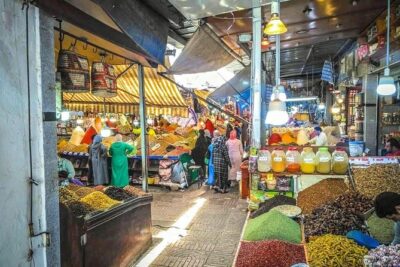
Casablanca Food Tour – Moroccan Street Food Tour
Read our review →
Browse the lists this tour appears in